Inside Russia’s 6,500-A-Month Drone Factory
Russia’s Alabuga plant can reportedly build 6,500 attack drones a month, and 33 air defence posts now guard it. Elsewhere: the road to AUTOWARCOM, a 777 km/h drone, drones that listen, a robot ship, Maven spreads and no kill switch.
The Shahed Factory
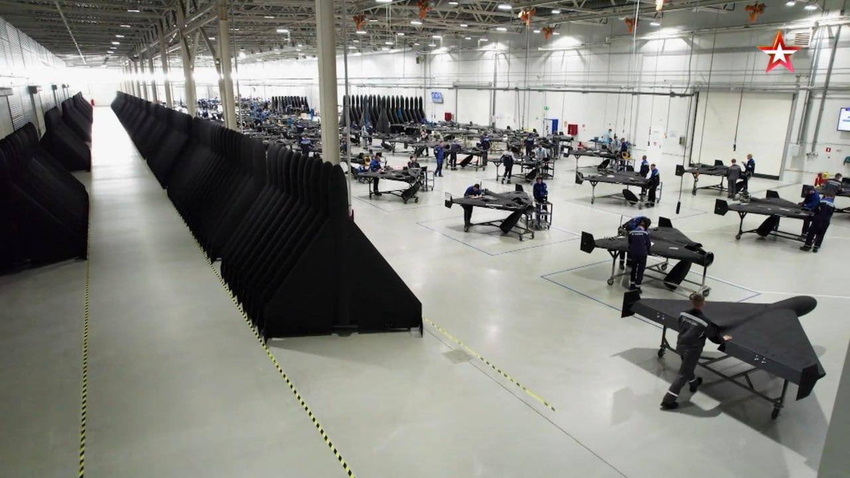
Russia’s Alabuga complex in Tatarstan can reportedly produce more than 3,000 petrol-engined Shahed-type drones a month, plus more than 3,500 jet-powered Geran-4s and Geran-5s, according to Ukraine’s government-backed UNITED24, citing Defense Express. These are capacity figures, not verified output. Research by the Center for Strategic and International Studies (CSIS) found that Chinese firms supplied an airframe production line, more than 685,000 engine components worth about $900,000 and 7,800 lithium-ion batteries in 2024 alone. Satellite navigation antennas from Chinese maker Harxon were reportedly exported as agricultural products. The plant is now heavily defended. Radio Liberty’s analysis of satellite imagery from 21 October shows 33 air defence positions, raised platforms for Pantsir and Tor systems, machine-gun towers and anti-drone nets over the production halls. Ukrainian drones last reached the site in June 2025.
The Road To AUTOWARCOM
The Pentagon has published its roadmap for the four-star drone command. In an open letter on 21 October, Project Agincourt leaders Owen West, director of the Defense Innovation Unit, and Navy SEAL Senior Chief Max Strasiser set out how the Autonomous Warfare Command (AUTOWARCOM) will stand up by 1 October 2027. Procurement decisions and money will be pushed to frontline units, which will serve as incubators. “Evidence will decide outcomes,” they wrote, with competitions, exercises and combat performance deciding which systems scale and which are cut. The command will also tailor systems by theatre, because Pacific distances and European land warfare call for different machines. Success will be measured by how fast an operational problem gets a fielded solution, not by paperwork milestones.
Faster Than A Geran
German firm Quantum Systems says its battery-powered Apex Recordhunter flew at 777 km/h, faster than any battery-electric drone before it. That is more than 200 metres a second. It is not yet an official record, because the return leg needed to cancel out the wind has still to be flown. The drone is an experimental demonstrator built by the company’s N3XT team and runs on battery cells from a Porsche subsidiary. The point is interception. Russia’s jet Gerans fly at 500 to 600 km/h, too fast for many small interceptors, and Russia launched 3,177 jet drones at Ukraine in September. Quantum says the lessons feed its interceptor work with Kyiv-based WIY Drones, and it has an order for 15,000 of WIY’s Strila interceptors for Ukraine’s National Guard.
Drones That Listen
First-person-view (FPV) ambush drones, which land beside a road and wait for targets, are now being fitted with microphones, reports David Hambling for Forbes. Russian state news agency TASS said in September that Prince Vandal Novgorod fibre-optic drones, reportedly built at some 50,000 a month, now carry them. They can hide in grass out of sight and take off when they hear an engine. On 17 October, Ukrainian maker Ptashka said all its fibre-optic drones now have microphones. It claims they detect loud conversations at 20 to 30 metres, light vehicles at 50 to 100 metres and heavy equipment at up to 200 metres. Operators can also hear counter-ambush drones coming and move. Networked, the microphones could locate artillery by sound.
A Hybrid Navy Starts Small
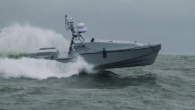
The UK Ministry of Defence is close to contracting a large uncrewed surface vessel (LUSV) that will be in the water in 2027. The contractor-owned demonstrator, more than 24 metres long, will spend up to four years proving it can operate autonomously, be certified under collision rules written for crewed ships and work alongside a warship. A second phase adds Royal Navy equipment. It is the first hardware step in the Future Air Dominance System (FADS) programme. That programme is meant to replace the Type 45 destroyers from 2035 with at least six crewed Common Combat Vessels controlling uncrewed missile carriers and radar pickets. The navy is also studying a Type 45 life extension, with a decision due in 2027-28.
Maven For Every Marine
The US Marine Corps has made the Maven Smart System available service-wide, reserves included, under an enterprise licence signed on 1 October. Until then, only specific commands could use the Palantir-developed, government-owned platform, and only over the Secret Internet Protocol Router Network (SIPRNet). Maven fuses intelligence reports, drone video, satellite imagery and maps for commanders and analysts. Pentagon officials say it helped identify and strike more than 2,000 targets in Iran in the first 96 hours of Operation Epic Fury, and that it processes about 6 million pages of text a day. Some 5,500 Marines used it in the month before an August training summit, and the Corps has already moved its situation reports onto a Maven application.
No Kill Switch
Maven is also NATO’s system, and Palantir is trying to calm European nerves. Louis Mosley, Palantir’s executive vice president for the UK and Europe, told Reuters there are no kill switches and that neither the company nor the US government can turn the platform off once a customer has bought it. The reassurance follows this month’s Starshield speed restrictions in Ukraine. Elon Musk said such limits are decided by the US military, and President Trump said he did not believe anything had changed. Palantir won a €480 million NATO contract in 2025, and Maven reached full technical operational capability at Supreme Headquarters Allied Powers Europe (SHAPE) in June. France and Germany have opted out, and France is building its own system, Arcadia.
Featured Image – Workers assemble Shahed-type attack drones at Russia’s Alabuga production facility in Tatarstan – Zvezda )