US Army Moves Its AI Targeting Network Into Production
The US Army has awarded Palantir and Anduril $192M to move TITAN targeting into production. Also: Russia dodges sanctions for cheaper jet drones, Germany builds 5,000 drones for Kyiv, a jamming dome stops every drone, and a robot survives five hits.
The Pentagon’s Targeting Network Moves To Production
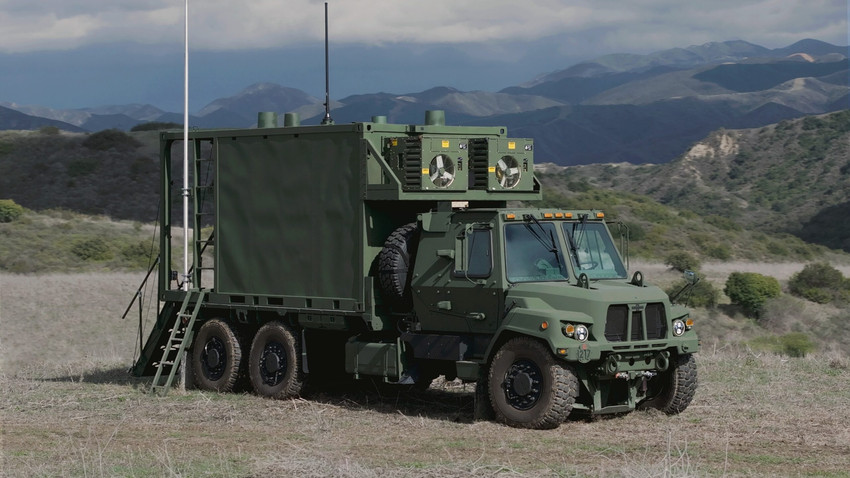
The US Army has moved its Tactical Intelligence Targeting Access Node programme from prototyping to production with a combined $192 million award to Palantir and Anduril. Palantir, taking $127 million as prime contractor, will lead production alongside L3Harris, Sierra Nevada and other partners, while Anduril’s $65 million share covers the ruggedized, vehicle mounted hardware that lets the system pull targeting data from space sensors in the field. The order covers four advanced and four basic variants for delivery over 18 months, adding to nine existing prototypes already in service, with further production orders expected in fiscal 2027.
Russia Finds A Workaround For Sanctions
The kind of target that system is built to track keeps getting harder to catch. Russia has acquired advanced 3D printing equipment comparable to technology used in Rolls-Royce manufacturing despite Western sanctions, The Economist reported, letting Moscow cut its jet powered drone costs roughly in half to around $50,000 to $70,000 apiece. Ukrainian air defenses intercepted only about 30% of jet powered drones in recent barrages, against a shoot down rate above 90% for older propeller driven Shaheds, and Russia’s air force says it launched five times as many jet powered drones in July as in June.
Germany Answers With Its Own Production Line
Germany is trying to out-scale that threat rather than just intercept it. Production has begun on more than 5,000 medium and long range drones for Ukraine through a joint venture between German-American firm Auterion and Ukrainian manufacturer Airlogix, part of a €300 million deal due to complete by mid-2027. Auterion is building the software and jamming resistant AI systems while Airlogix handles the airframes, with one model reaching 1,500 kilometers of range, as Ukraine pushes toward President Volodymyr Zelensky’s stated goal of 1,000 long range drone strikes a day.
A Jamming Dome Stops Every Drone In A Trial
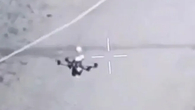
Ukraine is also refining what stops drones without shooting them down. The 58th Separate Motorized Infantry Brigade ran a scripted attack using Mavic reconnaissance quadcopters and FPV strike drones against its Serval Cube electronic warfare dome, which suppressed every drone launched at it during the test by jamming control, navigation and video channels rather than destroying the aircraft outright. None of the drones reached their target, part of a wider crowding of Ukrainian counter drone systems that includes Contra Drone’s 20-system architecture and Rebel Group’s Brama jammer, now seeking official codification.
A Ground Robot Survives Five Hits To Finish Its Mission
Not every system relies on jamming to keep working. Ukraine’s Droid TW-12.7, an armed ground robot, survived five separate FPV drone strikes during a raid on a Russian troop position, including one that knocked out its aiming module, before a sixth hit finally disabled it on the way back. Operators simply aimed by pointing the whole vehicle at the target and kept firing, clearing the position before withdrawing, the kind of built-in redundancy DevDroid says matters more for survivability than merely staying mobile after a hit.
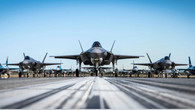
Featured Image – Tactical Intelligence Targeting Access Node (TITAN)/Palantir