Bridges Fall Piece by Piece
Ukraine has downed more bridges this month than in the previous three years combined, using $55k drones and AI-guided mini cruise missiles. Plus: Pentagon consolidates drone oversight, London stands up a taskforce, Ukraine exports FPVs to the US.
Bridges fall piece by piece
Ukraine destroyed more Russian-held bridges in June than in 2022, 2023, and 2024 combined, and did it with hardware that costs a fraction of a laser-guided bomb. The workhorse is the Fire Point FP-2, a long-range attack drone carrying a 350-pound warhead and guided in like an FPV. At $55,000 apiece and built by the hundreds daily, it chips away at bridge supports one strike at a time, something that eluded WWII bombers and, decades later, HIMARS and Storm Shadow strikes on the same targets. A faster companion, the AI-guided Ruta mini cruise missile, adds a 500-pound warhead and enough onboard vision to lock onto supports at 600 mph. With Russian air defenses thinned and batteries pulled back to defend Moscow, the campaign is only accelerating.
Warheads get more specific
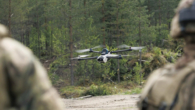
The precision runs down to individual munitions too. Ukrainian Armor has fielded the UB80D10-EFP, an FPV drone built around an explosively formed penetrator rated to punch through 50mm of armor, enough to defeat cage-armored vehicles that shrug off standard shaped charges. It ships in radio and fiber-optic variants with a 30km range.
Washington consolidates its drones
That pace of innovation is what’s driving the rebuild in Washington and London. Pete Hegseth has created a Direct Reporting Portfolio Manager for Unmanned Systems, pulling four scattered organizations, including the Defense Innovation Unit and the counter-drone Joint Interagency Task Force 401, under one office answering straight to the Deputy Secretary of War. The goal is speed: tens of thousands of small drones to US forces this year, hundreds of thousands more by 2027, as the Pentagon tries to close a production gap with Russia, which plans to build more than seven million drones in 2026 alone.
London follows with its own unit
The UK has now stood up an Uncrewed Systems Taskforce of its own, backed by the £5bn Defence Investment Plan and billed as drawing on Ukraine’s experience. The comparison only stretches so far. Ukraine’s Unmanned Systems Force is a 40,000 to 80,000-strong branch built around treating drones as consumable ammunition; the UK taskforce is a coordination layer for procurement, closer in spirit to the Pentagon’s new office than to anything Kyiv has built.
A warship fires its first drone
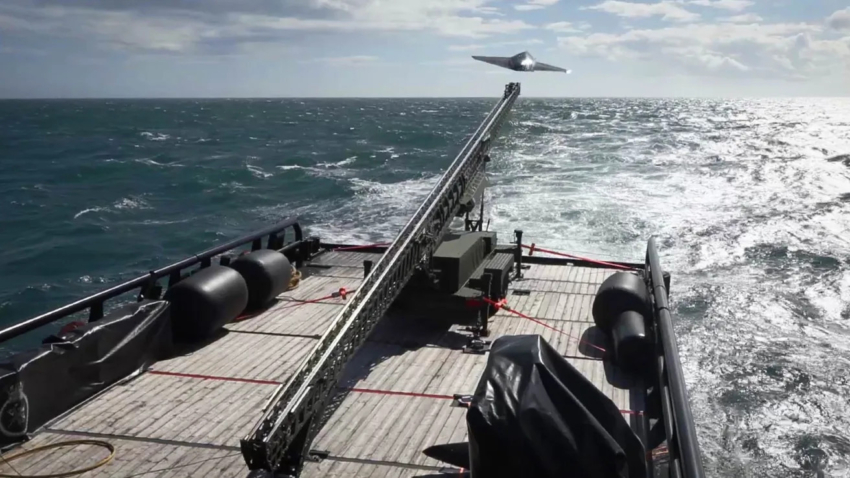
That gap between announcement and capability showed up at sea, where the Royal Navy launched a Callen-Lenz Nyan strike drone from the trials ship XV Patrick Blackett, the first time a one-way attack drone has flown from a British vessel underway. The pneumatic launcher worked as intended, but a single trial from an experimental vessel is a long way from a fielded weapon.
Ukraine starts selling back
The traffic isn’t one way anymore. Ukraine cleared its first export permit for finished combat drones on 1 July, and the first buyer was the Pentagon itself. F-Drones’ F10 quadcopter, built without Chinese components and already scored against 24 rivals in the Pentagon’s Drone Dominance trials, is now headed for a factory of its own in Ohio. Four years into the war, the country that needed Western weapons is starting to sell its own back to the country that supplied it.
Image – Royal Navy