Russia’s Drone Launching Shadow Fleet
IISS traces 144 European drone sightings across 13 states to Russia’s shadow fleet. Also: One Pentagon drone office, London’s £5 billion autonomy bet, NDAA doctrine push, Ukraine’s Pacific test run, CCA production start.
A Paper Trail For Ghosts
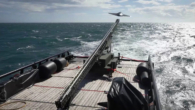
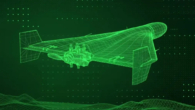
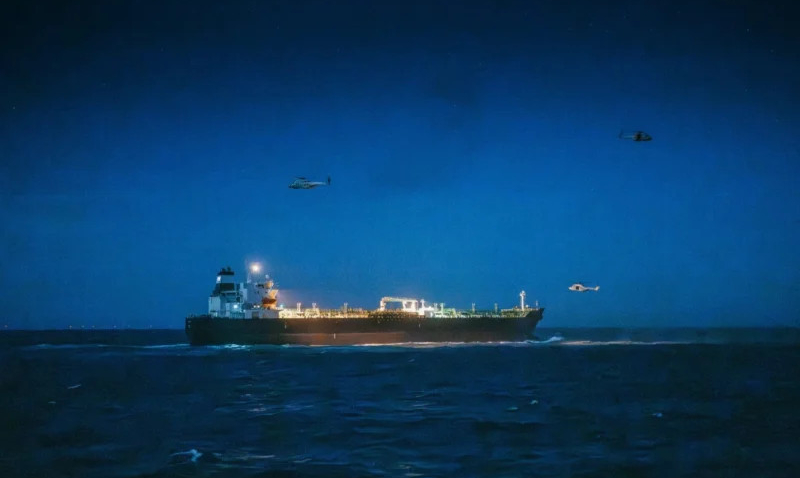
A three-person research team at the International Institute for Strategic Studies has done what thirteen national governments could not: put a number on Europe’s drone panic. The IISS report compiles 144 suspected drone sightings across 13 European states between August 2024 and February 2026, and concludes it is “highly likely” that Russia’s shadow fleet, tankers and freighters of murky ownership sailing with their AIS transponders switched off, launched at least a subset of them. Roughly 48% of sightings occurred over military facilities, including Belgium’s Kleine-Brogel and the Netherlands’ Volkel, both reported to host US B61-12 gravity bombs under NATO sharing arrangements. Incidents jumped from four a month to 22.5 a month between September and December 2025.
London’s Answer Is Cash
Europe’s readiness gap did not go unanswered in London, where money did the talking this week. On June 30, outgoing Prime Minister Keir Starmer published the Defence Investment Plan, backed by £298 billion over four years and including £15 billion in genuinely new money, a 27% real-terms increase. Of that, £5 billion is earmarked specifically for drones and autonomous weapons, part of a wider pledge that at least 10% of the Equipment Programme goes to novel technologies including AI, autonomy and quantum. The plan describes a hybrid Royal Navy pairing crewed Type 26 and Type 31 frigates with uncrewed vessels. But it lands nine months late and £13 billion short of the £28 billion defence chiefs wanted, and it cost Starmer his defence secretary: John Healey resigned in June, warning the numbers left Britain “less safe.” Starmer takes the blueprint to the NATO summit in Ankara on July 7, though he is expected to leave office within weeks of presenting it.
One Office, All The Drones
Washington spent the same week consolidating rather than spending. The Department of War announced a new Direct Reporting Portfolio Manager for Unmanned Systems on July 1, folding drone and autonomy programs currently scattered across the services, the Defense Innovation Unit, Joint Interagency Task Force 401 and the Defense Autonomous Warfare Group under a single manager reporting to Deputy Secretary of War Stephen Feinberg. The stated goal is speed: Secretary Pete Hegseth wants tens of thousands of small drones fielded this year and hundreds of thousands by 2027.
Doctrine Catches Up
Congress is moving in step. The House Armed Services Committee’s FY27 NDAA draft adds provisions on common operating systems, training, sustainment and doctrine rather than simply funding more airframes, treating unmanned systems as permanent infrastructure instead of an emerging capability. Doctrine normally follows proof of concept. Writing it now suggests lawmakers think that proof already happened.
Ukraine’s Navy Goes To The Pacific
Proof, if any is needed, keeps arriving from the Black Sea. Ukraine’s Sea Baby strike boats now carry six to eight FPV drones in side compartments alongside thermobaric rockets, with a claimed 1,500-kilometer range on a 2,000-kilogram payload, some fiber-optic guided to defeat radio jamming. The lesson has crossed oceans: US special forces sank a target ship with a Ukrainian-built Magura drone boat at the Balikatan exercise off the Philippines on June 24, the technology’s first Indo-Pacific combat use.
Hardware Enters Production
Industrially, the pieces are lining up too. The Air Force moved Anduril’s YFQ-44A Fury and General Atomics’ YFQ-42A into production for Increment 1 of the Collaborative Combat Aircraft program, four months ahead of schedule. Ukraine is on pace to build seven million military UAVs this year. And at Eurosatory in Paris, nine NATO members signed on to the US Army’s UAS Marketplace, giving allies a shortcut to battle-tested counter-drone kit instead of running fresh competitions from scratch. None of it answers whether Russia’s shadow ships did what IISS says they did. But everyone building drone policy this month is betting the answer is yes, and is spending accordingly.
Image – Belgian Defence