
Drones Are Eating the Military’s Command Structure Too
Ukraine floats a stratosphere missile that defeats Russian jamming by cutting its own navigation off. Also: Britain ditches its destroyers for drone-coordinating warships, a US company cleared a fortified breach with 35 drones and 100 pounds of C4, AI is weeks from picking its own targets in Ukraine, and South Korea wants half a million drone warriors by 2029.
Britain Ditches the Destroyer
The UK government has confirmed it will not replace the ageing Type 45 destroyers with the planned Type 83 successor. Instead, the Defence Investment Plan will fund six Common Combat Vessels, smaller hybrid ships explicitly designed to coordinate uncrewed systems across air, surface, and sub-surface domains. The Ministry of Defence says the vessels will provide “resilient air defence” with a reduced crew footprint. Delivery is expected in the 2030s, though no figure has been attached to the programme. The announcement came alongside £500 million for the Commando Force to receive high-speed boats and autonomous systems, part of a wider DIP that defence ministers John Healey and Al Carns both resigned over before publication, citing inadequate Treasury funding.
The Missile That Goes Blind to Hit
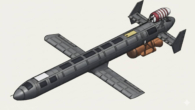
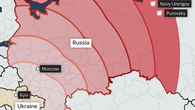
Ukraine is deploying a balloon-launched missile called DART that solves the Russian jamming problem by switching off its own guidance at around four miles altitude and riding a solid-fuel engine to the target on a fixed course. Once navigation cuts out, there is nothing for Russian electronic warfare to lock onto. The 22-pound warhead scatters graphite filaments designed to short out power grids. The parent balloon rides prevailing westerly winds deep into Russia; Kyiv has already launched more than 1,000 of them. Separately, Ukraine has been launching AI-guided Hornet strike drones — built by Eric Schmidt’s Perennial Autonomy, which won a US contract worth up to $500 million last month — from balloons at 26,000 feet, roughly doubling the drone’s effective range from 93 to 186 miles by trading altitude for fuel.
35 Drones, One Uncontested Breach
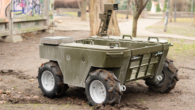
At the US Army’s Joint Readiness Training Center in April, a company commander cleared a fortified breach position without putting a single rifleman in the kill zone first. The approach used 25 assembled attack drones to destroy bunkers, machine gun nests, and concertina wire, while further systems dropped smoke and others targeted electronic warfare sensors. Two ground robots packed with C4 destroyed remaining mine and wire obstacles. “When the riflemen got there, the breach was uncontested,” said brigade commander Col. Ryan Bell. The cost was 35 drones and around 100 pounds of C4, “under the cost of three 155mm artillery barrages.” Bell noted that AI proved useful for processing 25,000 battlefield reports but unhelpful for course-of-action development: “Large language models don’t really understand three-dimensional space.”
AI Picks the Target Next
Ukraine’s Ministry of Defence drone adviser Serhii “Flash” Beskrestnov wrote this week that autonomous target selection is “undoubtedly the near future for the entire class of strike UAVs.” Russia and Ukraine are both at the first stages of combat testing for drones that can independently identify, prioritise, and decide to attack a target. Terminal guidance — steering a loitering munition to a chosen aim point — is already operational on both sides. What comes next is the full sequence: target recognition, priority ranking, and an autonomous strike decision, without a human in the loop at the moment of attack.
Seoul’s Half-Million Drone Warriors
South Korea’s defence ministry announced last week that it intends to train every member of its 450,000-strong military to operate drones as a second personal weapon, treating them as a universal combat tool equivalent to a personal firearm. The ministry cited Ukraine and the Middle East as the direct inspiration. Eleven thousand training drones are being issued this year, with a target of 60,000 across the force by 2029. All must be free of Chinese components, which rules out most of the world’s cheap commercial hardware. South Korea has also ordered 20,000 low-cost military drones and is reorganising its drone command from a combat authority into a procurement and industry coordination body. North Korea has been rotating veterans of the Ukraine fighting back home to pass on lessons learned.
ASGARD Compresses the Kill Chain
At the RUSI Land Warfare Conference on 23 June, Chief of the General Staff General Sir Roly Walker disclosed that the British Army’s ASGARD DECIDE AI system, trialled on Exercise ARCADE STRIKE in an underground command post beneath central London, has reduced corps-level planning cycles from 72 hours to one. Target prosecution capacity has increased tenfold, limited now only by available munitions rather than staff bandwidth. Walker said the system is evolving on an eight-to-twelve week spiral cycle and described it as “not just a digitised sensor-to-shooter system” but the foundation of an agentic AI headquarters where humans “increasingly get to say yes or no.” The US Army has adopted British data standards to enable interoperability. Walker committed to deploying remote and autonomous systems to the eastern flank, ready to strike within 30 minutes, within the next year.
Image – Euromaiden Press