A War of Operating Systems
Ukraine reveals autonomous drones that killed without a human in the loop. Also: the Army builds a counter-UAS hunter-killer robot in 48 hours, a 1,000 kg underwater strike drone debuts at Eurosatory, the Sting interceptor’s speed trade-off, and Kyiv opens its battlefield AI data to 100 companies.
Ukraine’s Drones Learn to Kill on Their Own
Ukraine’s military has crossed a line it had been approaching for months. Alexander Kokhanovsky, developer of the country’s “Terminator” autonomous quadcopters, disclosed that ten drones conducted a fully independent combat test in 2024, covering roughly three miles of territory and engaging everything they encountered with no video feed and no operator contact. “Everything it sees will be killed,” Kokhanovsky told New Scientist at a Ukrainian embassy event. The trial was never scaled. But it landed alongside a Reuters interview with Danylo Tsvok, head of Ukraine’s defence ministry AI centre, who predicted the conflict will become a “war of operating systems” within three to five years. Ukraine still keeps a human in the loop on combat decisions. But Tsvok acknowledged the horizon: “How do we keep up with making decisions that autonomous systems propose?”
Feeding the Machine
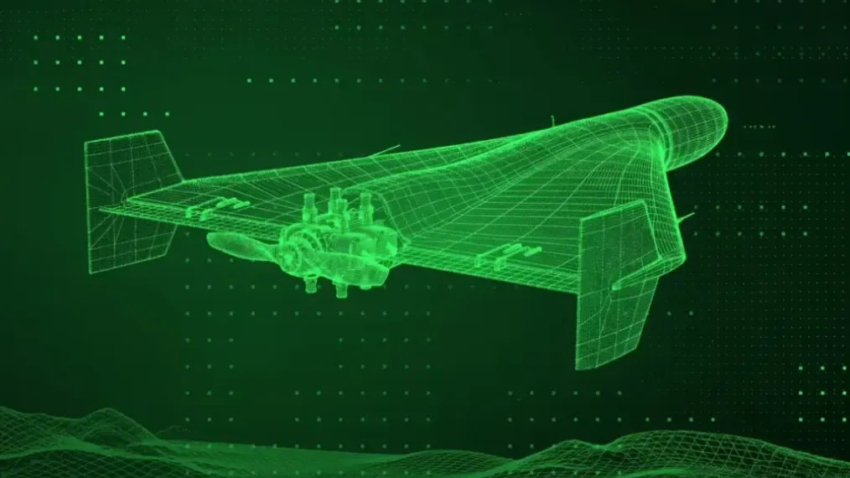
The data to train those systems is now flowing more freely. Ukraine’s Ministry of Defence announced on 11 June that more than 100 companies have access to Brave1 Dataroom, a secure platform providing real combat footage including visual and thermal imagery of aerial targets across varying weather conditions and sensor types. The initial focus is counter-drone: automated detection and neutralisation of Shahed-type UAVs. The loop from battlefield data to deployed AI model is getting shorter.
48 Hours, One Hunter-Killer
At Fort Carson, Colorado, six US defence companies assembled a working counter-drone ground robot in approximately 28 hours during the Army’s Operation Jailbreak exercise. AZAK provided the wheeled platform, Allen Control Systems its Bullfrog autonomous machine-gun turret, Havoc the autonomous driving software, Leonardo DRS the radar, Picogrid the integration layer, and Anduril’s Lattice platform tied it together. The hunter-killer pair is designed to rove ahead of troop formations and engage UAS swarms before they reach soldiers. The Army has not committed to procurement, but both lead companies signed a memorandum of understanding for joint production.
Sea Trident at Eurosatory
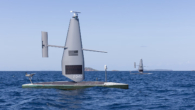
Ukraine unveiled the Sea Trident at the Eurosatory exhibition in Paris on Monday: a ten-metre, 10,000 kg autonomous underwater vehicle with a 3,218-kilometre range, 60-metre diving depth, and 1,000 kg payload capacity. That range is four times the Magura V5 surface drone’s 800 kilometres and the payload three times its 320 kg warhead. It is designed for strike missions and intercepting hostile underwater vehicles, with a low-observable profile for contested waters.
Faster Isn’t Always Better
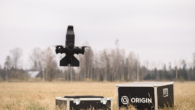
Wild Hornets, maker of Ukraine’s Sting interceptor, initially built a prototype exceeding 200 mph. Ukrainian military feedback pushed them back: loitering time mattered more than top speed, and reliability suffered at higher velocities. The current Sting runs at 175 mph, stays airborne over 20 minutes, and costs under $2,000 per unit against tens of thousands for each Shahed it pursues. It was credited with 1,500 Shahed kills in April alone. A new system called Hornet Vision now lets experienced pilots fly it from hundreds of miles away.
Image
Brave1 Dataroom, an AI-powered defense innovation platform developed under Ukraine’s Ministry of Defense and the Brave1 initiative
Source: Ukrainian Ministry of Defense