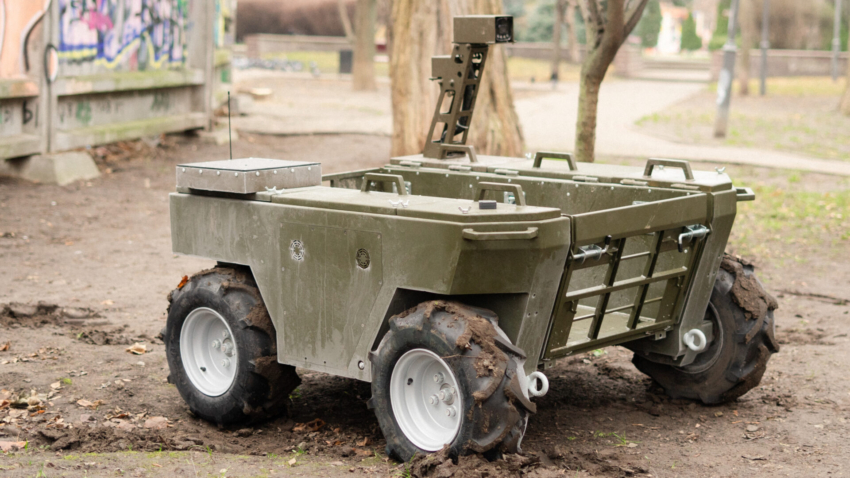
Ukraine’s Ground Robots Scale Up
Ukraine’s Trinity Robotics plans to double robot output to 2,200 units. Also: Iran’s downed Reapers, a UK drone warship, Anduril’s NATO win, a killer robot ban, Kraken’s unicorn round, GPS-denied maps, AI decision limits.
Ukraine’s Trinity Robotics, maker of the Konyk One unmanned ground vehicle, plans to double production to around 2,200 units this year, up from an initial target of 1,100, as the Ukrainian military increases its orders. The company is negotiating a joint venture with an unnamed French producer to build the platform abroad, working within Ukraine’s Build with Ukraine programme, which allows surplus output to be exported once domestic military needs are met. Kyiv’s defence companies are currently barred from exporting outright, so joint manufacturing on allied soil is becoming the workaround of choice.
Iran Exposes The Cost Of Exquisite Hardware
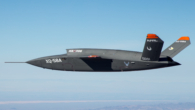
That cheap, disposable model looks increasingly like the future everywhere. Iran has shot down roughly 30 US MQ-9 Reaper drones since the war between the two countries began, a US official confirmed this week, at a cost General Atomics has priced as high as $50 million per aircraft. The manufacturer stopped building new Reapers last year. The Pentagon’s answer arrived fast: the Defense Innovation Unit issued a notice for a Massed Modular Aircraft, a hunter-killer drone built for mass rather than exquisiteness, with a target of a flying prototype within 21 months.
Britain Picks Its Drone Command Ship
The UK is making a similar bet on numbers over exquisiteness. The Royal Navy is narrowing the hull design for its planned Common Combat Vessel, the crewed command ship meant to replace the Type 45 destroyer by directing swarms of uncrewed air, surface and underwater platforms rather than fighting alone. Reports point to a Type 31 or Type 26 derivative, with at least six vessels due from the early 2030s.
Anduril Wins Its First NATO Contract
Interoperability is the harder problem once the hardware exists. Anduril has been selected, alongside Palantir and French firm Athea, to run a nine-month evaluation of its Lattice command and control software as part of NATO’s Enhanced Air Command and Control data platform, announced at the Summit Defence Industry Forum in Ankara. Lattice is designed to connect 32 members’ existing systems rather than replace them, letting nations retain sovereignty over their own data even as they share a common operational picture.
Where AI Actually Helps Decision-Making
While the hardware race runs on volume, a new report from Georgetown’s Center for Security and Emerging Technology argues the bigger unexploited gains sit elsewhere. Beyond Targeting points out that the U.S. Army’s 18th Airborne Corps used the Maven Smart System to run artillery targeting with a 20-person team, a task that needed 2,000 people in 2003. The report’s authors argue that data accessibility, not model capability, is now the main barrier to scaling AI tools into planning and logistics processes well beyond the targeting cycle that dominates the public debate.
A Push To Ban Killer Robots
Not everyone building this infrastructure wants it moving faster. UN Secretary-General António Guterres opened the first Global Dialogue on AI Governance in Geneva by demanding a binding international ban on lethal autonomous weapons (limited preview, WSJ paywalled). More than 120 countries back some form of treaty, but the US, UK and Russia favour voluntary codes instead, and Guterres’s own 2026 deadline for a binding instrument has now passed with formal negotiations not yet begun.
Kraken Crosses A Billion
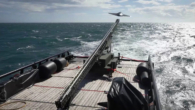
Money keeps moving regardless. Kraken Technology Group, the Fareham-based maker of uncrewed surface vessels, closed a $175 million Series B at a $1 billion valuation, led by Digital Transformation Capital Partners with the NATO Innovation Fund and Rheinmetall among the backers. The round landed days after Kraken’s K3 Scout was airdropped from an A400M transport aircraft into open water for the first time, part of Royal Navy trials under Project Beehive.
Space-Based Maps For GPS-Denied Drones
And the terrain those drones fly over is getting its own upgrade. Vantor, the Earth observation company formerly known as Maxar, has launched WorldView 3D, a service that rebuilds chosen stretches of the planet as 3D terrain models and delivers them within 24 hours, sharpened to 15 centimetres in its highest-definition tier. The product pairs with Vantor’s existing Raptor navigation software, letting drones match their camera view against the map when GPS is jammed or spoofed, a growing constraint from Ukraine to the Red Sea.
Image – Trinity Robotics, Konyk One