
Sea Drones Strike Iran’s Bandar Abbas In Combat First For The US Navy
The US Navy struck Iran’s Bandar Abbas with sea drones in its first ever combat use of the platform. And: a $400 drone kills a $19M helicopter, Moscow refinery’s flying tank lid, first CCA live-fire, Storm Fighter unveiled, Helsing’s $1.8bn round.
Sea Drones Get Their First Kill
The US Navy has used sea drones in combat for the first time, striking a submarine and ship maintenance facility at Iran’s Bandar Abbas naval base with three Corsair unmanned surface vessels. Built by Saronic, the 24 foot Corsair carries a 1,000 pound payload over 1,000 nautical miles at up to 35 knots. The same class of vessel rescued a downed Apache crew off Oman in June, before this week’s strikes shifted its mission from surveillance to attack.
A $400 Drone Downs A Helicopter
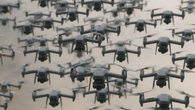
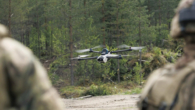
The more striking asymmetry played out over land. Ukraine’s Unmanned Systems Forces destroyed a Russian Mi-28 attack helicopter worth $19 million with a Shrike 10 FPV drone that costs about $400, striking near Vyazove in Russia’s Belgorod region on Wednesday. Footage released by commander Robert “Magyar” Brovdi shows the drone climbing level with the helicopter before diving onto it from above. Oryx has now confirmed at least 20 Mi-28 losses since the war began.
The Output Behind The Kill
That kind of asymmetry only scales with volume, and Ukraine now has plenty. President Volodymyr Zelensky said this week the country is producing 10 million drones a year, up from a 2025 estimate nearer 4 million, and is targeting 20 million with allied funding. The number of domestic manufacturers has grown from 10 in 2022 to more than 500 by 2025.

A Tank Lid Becomes A Flying Saucer
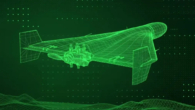
Ukraine’s deep strike arsenal is just as capable of hitting fixed targets. A June assault on Gazprom Neft’s Moscow refinery sent an oil storage tank lid hundreds of feet into the air in a viral explosion, but the more consequential hit landed on the refinery’s AVT-6 distillation unit, the second of two such units disabled in successive strikes. Russia claimed to have downed 200 drones from a mixed fleet of at least six types, including a new Sichen attack drone in its first confirmed combat use. Reuters later reported the refinery, which processed 12 million tons a year, would stay offline into 2027, at a total attack cost Fire Point put around four Tomahawk cruise missiles.
America’s Wingman Fires For The First Time
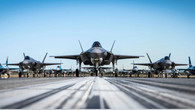
Washington is chasing scale of a different kind. The US Air Force conducted the first live weapons release from a collaborative combat aircraft this week, with Anduril’s YFQ-44A firing an inert AIM-120 missile at a simulated target beyond visual range from Edwards Air Force Base. Weapon release still requires a human in the loop. General Atomics’ rival YFQ-42A is scheduled for its own live-fire test this autumn.
Britain Names Its Own Wingman
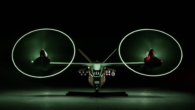
Britain has now put a name to its answer. The UK has designated its collaborative combat aircraft effort Storm Fighter, backed by £300 million to fly a demonstrator by 2030, alongside two new drone concepts: Storm Chrome for electronic attack and a 1,000 mile one way strike drone called Storm Fire. Officials want a demonstrator flying alongside a Typhoon as soon as next year.
The Money Keeps Following The Autonomy
European investors are betting the same direction. Germany’s Helsing raised $1.8 billion in Europe’s largest ever defense startup funding round, valuing the company at $18 billion on the back of its HX-2 strike drone and Altra battlefield software. It follows a $1.2 billion round for Quantum Systems and a $175 million round for the UK’s Kraken Technology this year alone. Cheap drones are killing expensive helicopters and refineries, wingmen are learning to fire, and the money says none of that was a one off.
Image – An aerial view shows the wakes of three Saronic Corsair unmanned surface vessels underway – Saronic Technologies