
Russia’s Wildberries Warehouses Lose 15% of Floor Space to Drones
Drone strikes wiped out 8 Wildberries warehouses in July, 15.4% of its floor space, for close to $2 billion in damage. Ukraine’s 500,000-a-month drone output, a record-altitude kill, Britain’s sovereignty bet, Iran’s fastest kamikaze drone yet.
Burning Down The Warehouse
Ukrainian drones destroyed eight Wildberries warehouses in July, roughly 860,000 square metres, or 15.4% of the retailer’s floor space, with the Penza hub the latest to burn on the 30th. The economic damage already tops $2 billion, and insurers are reportedly refusing to pay out. The Fire Point FP-1 drones doing the work carry a modest 120-pound warhead, nowhere near enough to flatten a factory. But that was never the point. As David Hambling notes, the tactic follows T.X. Hammes’ old formula: the drone just needs to “bring the detonator.” A typical warehouse is 20 to 30% cardboard, plus aerosol cans and lithium batteries that burn fiercely once ignited. Russia insists Wildberries is civilian, but Ukraine cites its “everything for the SVO” product line.
Bring The Detonator, At Scale
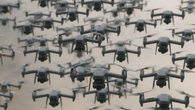
That approach only works at industrial volume, and Ukraine now has it. A senior Pentagon official told Reuters that Ukraine will build six to seven million small FPV strike drones in 2026, roughly 500,000 a month. The Pentagon’s own $1.1 billion Drone Dominance Program expects to have ordered fewer than 200,000 in total by February 2027. “It’s much harder to get from zero to 200,000,” the DIU’s Travis Metz admitted, than to scale once suppliers already exist. The Pentagon is making its own task harder deliberately, banning Chinese components, including brushless motors, from every drone entered into August testing.
eBaly Buys More Firepower
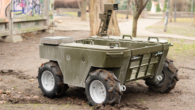
Demand is keeping pace with supply. Ukraine’s military placed a record 5 billion hryvnia in June orders through the Brave1 Market, its battlefield procurement app, for drones, ground robots and electronic warfare kit, the largest single month since the scheme began. Troops earn “eBaly” points for verified strikes and reconnaissance, then spend them on any of over 1,000 catalogue items, from FPV kamikaze drones and interceptors to ground robots, delivered in 8 days rather than the previous 10 to 14. Unmanned units have struck over 1 million confirmed targets since January.
London Buys Sovereignty
Britain took the domestic-production lesson to heart too. The Ministry of Defence handed Tekever a direct, up to £400 million contract for its AR5 drone under Project Corvus, replacing the ageing Watchkeeper, whose replacement had dragged on since 2005. The AR5 will be built at Tekever’s new Swindon plant, a reversal from 2020, when Britain’s Protector drones arrived with American-built airframes despite carrying British weapons. Every serious Corvus bidder led with sovereign manufacturing credentials. The UK’s delayed Defence Investment Plan backs the shift with £5 billion for autonomous systems out of £298 billion in defence spending over four years.
Six Kilometres And Falling
Altitude offers no guarantee either. A Ukrainian National Guard operator from Lasar’s Group shot down a Russian ZALA Z-20 reconnaissance drone at 6.4 kilometres, one of the highest interceptions the unit has recorded, catching it with a fixed-wing interceptor after Russian forces flew that high to dodge interception. The 18-kilogram ZALA carries a camera good for over 100 kilometres of range and six hours of loiter time, normally used to cue Lancet loitering munitions onto targets rather than fly into them itself. It didn’t survive the attempt. The same unit struck a Buk-M3 and an S-300V in June.
Iran’s Faster Kamikaze
Speed is the other variable now in play. Iran’s IRGC has fielded an upgraded Hadid-110 kamikaze drone against US bases and warships in the Gulf for the first time, a jet-powered, rocket-boosted design that Iranian sources put at roughly 510 km/h, nearly triple the Shahed-136’s cruising speed. A solid-fuel booster lifts it to speed before the turbojet ignites, launching from dispersed positions rather than fixed runways. It carries a 30-kilogram warhead and reportedly adopts radar-evasive shaping. Iranian officials call it their most capable one-way attack platform yet. The drone war, from Moscow’s warehouses to the Gulf’s naval lanes, is now fought on cost, volume, altitude and speed at once.
Image – Fire at a Wildberries logistics centre. Photo: Exilenova+