Forty-Five Reapers Down In The Iran War
The US has lost or damaged 45 MQ-9 Reapers in the Iran war, more than half of an 81-aircraft tally. And: Talon Blue flies itself, Germany forms a drone regiment, a FCAS drone advances, Britain’s 10,000 drones and a satnav-free robot boat.
The Reaper Bill Arrives
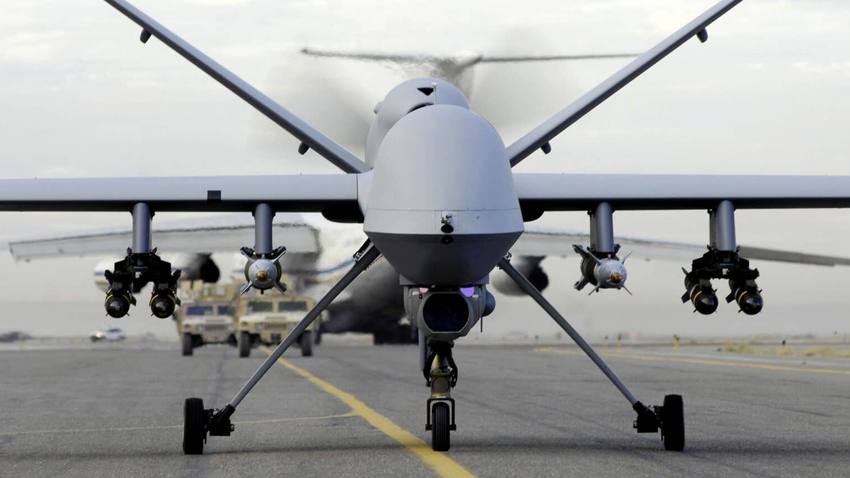
The US military has lost or had damaged 81 aircraft in operations against Iran since 28 February, according to an updated Congressional Research Service (CRS) assessment. That is almost double the 42 aircraft in its May report. MQ-9 Reapers account for 45 of the total, with 12 F-15E Strike Eagles, an F-35A and an E-3 Sentry also on the list, reports CNN. The tally covers shootdowns, friendly fire, crashes and strikes on aircraft parked on the ground, and some damaged airframes are already back in service. A Congressional Budget Office estimate puts the cost of replacing all US equipment lost up to 1 August at $1.9 billion to $3.3 billion. According to the Atlantic Council, the Air Force has lost about 35% of its Reapers since 2004.
Cheaper By Design
Industry’s answer is aircraft cheap enough to lose. Northrop Grumman’s company-funded YFQ-48A Talon Blue has completed its first fully autonomous flight, handling taxi, takeoff, manoeuvres and landing with no pilot input. Northrop says it cut part count and weight to allow affordable production at scale. The aircraft has an internal weapons bay.
Europe’s Remote Carrier
MBDA’s Remote Carrier Compact demonstrator has passed its preliminary design review under the French, German and Spanish Future Combat Air System (FCAS) effort. The drone is designed to escort, scout for and strike alongside crewed aircraft, with first flight planned for 2029. Remote carriers are among the FCAS elements that outlived the cancellation of its crewed fighter.
Germany Gets A Regiment
Germany will begin forming its first dedicated drone regiment in 2027, Defence Minister Boris Pistorius announced on 1 October. The unit starts with 300 to 350 personnel, grows to 600 and should reach full operational capability by 2029. Its five or six companies will cover close combat, electronic warfare, counter-drone defence and deep strike out to 500 kilometres. Ground robots will be an equal pillar alongside aerial systems. Basing and long-range platform contracts are still undecided.
Training The Hard Way
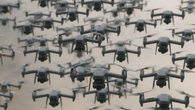
Britain is spending on pilots. The British Army bought more than 10,000 drones in a year through Project Rapstone, and most are for training. After 30 simulator hours, soldiers fly first-person-view (FPV) drones by hand with no flight aids and no GPS. The reasoning is simple. Hardware goes obsolete in weeks. Pilot skill does not.
Navigating Without Satellites
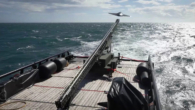
Jamming is shaping maritime autonomy too. Liverpool University spin-out Voyant Innovations navigated a Kraken K3 Scout uncrewed boat through the Solent on 5 October, matching live radar against stored coastline maps instead of using satellite positioning. The system also estimates how confident it is in each position fix, which matters for a robot boat working close inshore.
Featured Image – A US Air Force MQ-9A Reaper armed with Hellfire missiles and laser-guided bombs – Wikimedia