Ukraine Races Russia’s Jet-Powered Shaheds
Russia sent 76 jet-powered Shaheds at Ukraine in a single night, at speeds up to 600 km/h. Ukraine’s drone orders soar, FPVs shed batteries, robots rescue 45 soldiers, X-BAT gets Navy money and Britain untangles its drones.
Faster Shaheds
Overnight on 12 October, Russia launched 121 Shahed-type attack drones at Ukraine, 76 of them jet-powered, according to Ukraine’s Air Force as reported by the Kyiv Independent. Ukraine intercepts more than 90% of conventional Shaheds, but the jet versions reach 600 km/h, and the Defence Ministry expects 800 km/h in future. The answer is layered. In one engagement, a unit used five Bars jet interceptors to destroy five targets. Hundreds of large-calibre turrets are in service, and Kyiv residents have watched them engage jet drones over the capital. F-16s and Mirages remain among the most effective shooters, and Defence Minister Yevhen Khmara says pilots now use fewer munitions per kill. The constraint is maintenance and ammunition, with the ministry aiming to hold several months of reserves for both aircraft types.
Engines And Orders
Supply is climbing fast. Ukraine’s procurement agency has contracted for 5.5 times as many drones as in the same period of 2025, and deliveries are up almost 3.7 times, the ministry said on 11 October. The EU paid out €1.2 billion on 7 October, and €15.4 billion of its defence support for Kyiv remains unused before the end of 2026. Jet engines are the bottleneck. Khmara told journalists that demand for one type could reach around 10,000 a month in 2027, spanning interceptors, middle-strike and deep-strike drones and cruise missiles. Bars still relies heavily on imported engines. Around 20 Ukrainian manufacturers are now working on propulsion, and Fire Point has already built its own engine for the Flamingo cruise missile.
Dropping Dead Weight
Range is the other race. Unlike fuel, a battery weighs the same empty as full, so a drone hauls dead weight for most of its flight. Kyiv-based Stellarion now ships Deadliner first-person-view (FPV) attack drones that jettison a spent battery pack in flight, the way rockets drop empty stages. The company claims a 15% range gain, including the weight of the drop mechanism. Independent engineer Matthias Leidescher considers that plausible, and his own study found gains of up to 40% by splitting the battery into more droppable units, though heavily loaded drones benefit least. The Deadliner 10 claims a range of up to 50 kilometres. Russia’s 2S19 Msta-S self-propelled gun reaches about 29.
Robots Bring Them Home
The Artan special unit of Ukraine’s Military Intelligence Directorate (HUR) says its uncrewed ground vehicles evacuated 45 soldiers under fire this summer, mainly on the Zaporizhzhia front. The robots also hauled more than 41 tonnes of supplies, carried captured Russian soldiers and covered about 4,258 kilometres in total. They work in the kill zone, where drones can spot and strike conventional vehicles several kilometres behind the line. Artan did not say how many robots took part or which models. President Volodymyr Zelensky has set a target of at least 50,000 ground robotic systems for the military in 2026.
No Runway Required
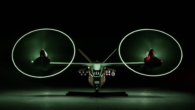
The US Navy has added $150 million to Shield AI’s X-BAT, an AI-piloted fighter that takes off vertically from a trailer and lands tail-first. Shield AI matches the sum, taking commitments to $400 million. Unusually, the money comes from a Pentagon fund for designing export versions. X-BAT uses the GE F110 afterburning engine from the F-15 and F-16, and Shield AI cites a range of more than 2,000 nautical miles and internal bays for 2,000-pound weapons. The same day, it signed a memorandum with Greek infrastructure group GEK TERNA on parts production and sustainment in Greece. The aircraft has not yet flown. First flight is targeted before the end of 2026, with a reported unit price target of $27 million and production from 2029.
Too Many Types
Britain’s problem is coherence. Army regiments each operate four or five drone types that cannot talk to each other, and at division level that adds up to hundreds, Commodore Neil Mathieson of the Military Aviation Authority told the Apex Europe conference. Doctrine has not caught up. The same question will arise for Royal Navy and Royal Air Force collaborative combat aircraft. A newly arrived two-star officer now runs the Uncrewed Systems Centre, which is meant to fix it. Colonel Thomas Erlenbruch of the Bundeswehr made the same case: soldiers cannot be trained on 50 different systems, so open interfaces must feed everything into one command and control system.
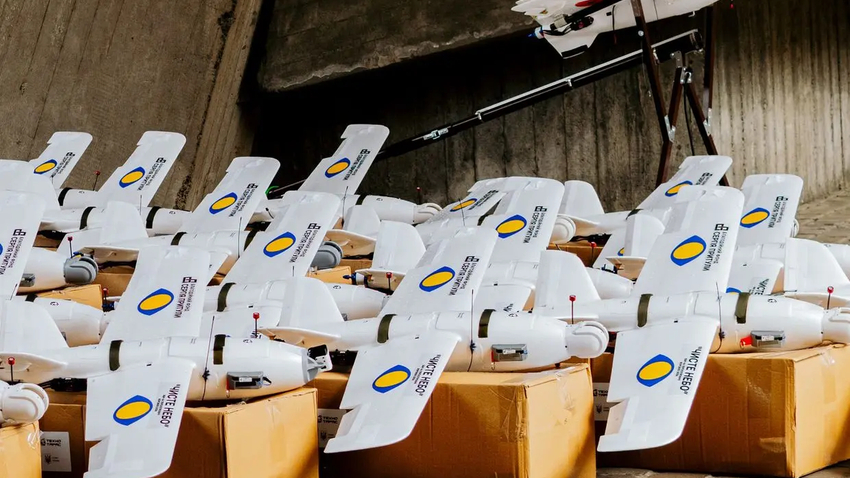
Featured Image – Interceptor drones, funded by the Prytula Foundation. Each drone costs under $2,000 and can be successful in downing Russian drones like the Geran – The Prytula Foundation/Facebook)