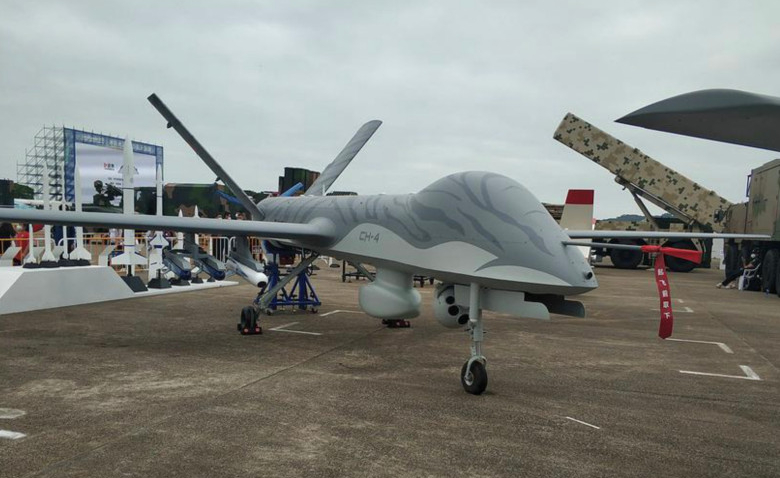
China’s Attack Drone Lost Its Lock, So The Operator Flew It By Hand
A Chinese UCAV’s autopilot lost lock on a manoeuvring target 3 minutes before the strike, so the operator flew it by hand. Elsewhere: a Chinese robot wolf, the Pentagon’s new counter-drone shop, Ukraine’s drone diplomacy, and a Taiwan swarm test.
Manual Override, Not Autonomy
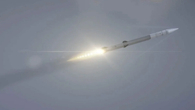
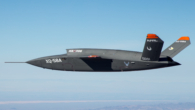
Chinese state broadcaster CCTV aired footage on 31 July showing a People’s Liberation Army Ground Force KVD002 UCAV sinking a small naval vessel during a live-fire exercise. State media called it proof the platform has “achieved full combat and support capabilities.” But the footage undercuts the automation story. Staff Sergeant Zhao Lichuan, who flew the mission, said the target’s evasive manoeuvres kept the UCAV’s onboard computer from locking on reliably. With three minutes to strike, he switched to manual control and hand-flew the attack himself. The 13 UCAVs shown at the unidentified southern airbase carried no weapons in the footage. China first unveiled the KVD002 in 2023; the PLAGF began inducting it that same year.
A Wolf With 150 TOPS
Chinese robotics firm Unitree has unveiled the AS2-W, a four-wheeled, 25-kilogram ground robot capable of carrying a 150-kilogram payload while stationary, weeks after an armed version turned up in Sino-Mongolian military drills. It climbs 80-centimetre obstacles and 45-degree slopes, runs an onboard AI module rated at 150 trillion operations per second, and carries LiDAR, GPS and 4G connectivity for autonomous navigation. Unitree hasn’t disclosed the AS2-W’s endurance under sustained military load, but the PLA has already shown interest after similar platforms performed reconnaissance and fire-support roles during the exercise.
A Marketplace, Pentagon-Style
The Pentagon has its own answer to slow procurement. The Joint Interagency Task Force-401 rolled out an enhanced online marketplace for counter-drone systems, built with Kaizen Laboratories under a $15 million contract and live for two weeks now. Buyers search validated kinetic weapons and jammers by requirement, compare performance data, and get AI-generated recommendations “across all aspects of the kill chain.” Anduril and AeroVironment already list products. Officials openly compare it to Ukraine’s Brave1 Market, which cut average delivery times to 8 days.
Nine Deals, Ten-Year Terms
Ukraine, meanwhile, is exporting the model that built Brave1. President Volodymyr Zelensky said Ukraine has signed Drone Deals with nine countries, with 15 more in negotiation, each running at least 10 years. The format goes beyond arms sales: Ukrainian teams assess a partner’s air defences first, then propose cooperation built on wartime experience, covering joint production and training as well as hardware. The EU and US have both signed on, the latter via a framework allowing temporary export of Ukrainian systems for testing.
Swarming Across Water
Autonomy is scaling to the sea, too. Shield AI and Thunder Tiger ran the first on-water test of Hivemind AI software controlling multiple unmanned surface vessels, staged off Pingtung, Taiwan. Using radar, imagery and AIS data, the software autonomously planned waypoints, detected a target vessel, and coordinated two SeaShark drone boats to escort it from the search zone without a human directing each move. Shield AI plans open-ocean trials next, aimed at US and allied maritime security missions.
Flying Time Is Not Free
Not every drone fight favours the defender. Ukrainian F-16s have destroyed more than 2,500 Russian one-way attack drones since mid-2024, but the interceptions are consuming airframe hours and missiles faster than Ukraine’s roughly 39-jet fleet can sustain, according to analyst Justin Bronk of RUSI. Russia builds more than 6,000 such drones a month. Bronk argues Ukraine should reserve its F-16s for cruise-missile intercepts and strike missions, leaving cheaper short-range air defences to handle the drone swarms instead.
Image – Asia Times