An F-22 Pilot Quarterbacks A Combat Drone
An F-22 pilot directed Anduril’s Fury drone through manoeuvres and simulated combat from the cockpit. Also: a robot ship joins a carrier group, mystery launchers on a Type 45, Starlink slows down, Russia’s AI dataset and a Norse-named munition.
Commands From The Cockpit
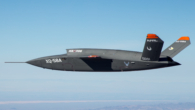
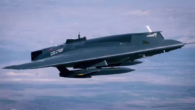
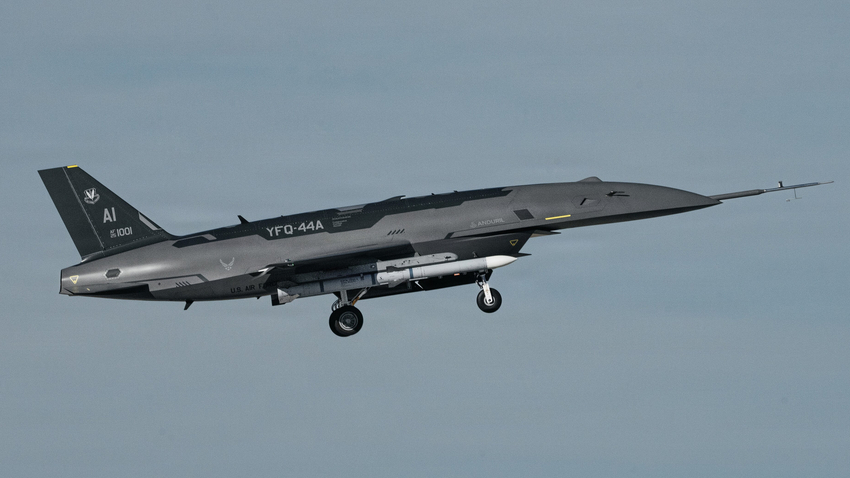
Earlier this month, an F-22 Raptor pilot directed an Anduril YFQ-44A Fury Collaborative Combat Aircraft (CCA) through dynamic manoeuvres and simulated combat tasks, the US Air Force has announced. The pilot acted as an airborne quarterback, issuing high-level tactical commands rather than flying the drone remotely, and the Fury’s onboard autonomy software interpreted and executed them in real time. Anduril says every taxi and flight test has been semi-autonomous from the start, with an operator monitoring and able to order a return to base at the push of a button. The Air Force has released no detailed results and does not claim the aircraft is ready for operations. It wants 500 combat-ready CCAs by 2032 within a fleet of 1,000. Fury will be the first programme built at Anduril’s five-million-square-foot Arsenal-1 factory in Columbus, Ohio.
A Robot In The Escort
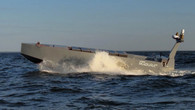
The US Navy has confirmed that the prototype uncrewed surface vessel (USV) Seahawk is sailing with the USS Theodore Roosevelt Carrier Strike Group, which left San Diego on 8 October. It is the first time a deployed carrier group has been accompanied by an uncrewed vessel too large to carry aboard a ship, reports Maritime Executive. Seahawk is a Leidos trimaran derived from the Sea Hunter design and built to run for months without maintenance or crew. It was delivered unarmed in 2021 to carry surveillance equipment and a submarine-tracking sonar. In September, the destroyer USS Chafee practised refuelling it from astern. The Navy has not released its configuration for this deployment. Acting Navy Secretary Hung Cao also said uncrewed underwater vehicles had cleared mines from the Strait of Hormuz, a job he said would have been impossible in contested waters without them.
Boxes On The Mast
Images released by the UK Ministry of Defence show the Type 45 destroyer HMS Dauntless carrying two mystery boxes on either side of its main mast. Naval News analysis suggests they are multi-cell vertical launchers for interceptor drones, each roughly 2 metres by 1 metre. No new sensors are visible, which implies the interceptors take targeting data from the ship’s existing Sampson and S1850M radars and electro-optical systems. That would point to an integrated counter-drone capability rather than a bolt-on fix. The Royal Navy declined to comment, citing operational sensitivities. The logic is magazine depth. A Type 45 carries 48 missile cells, and Red Sea operations showed how quickly cheap drones can drain them. Dauntless is due to escort HMS Prince of Wales to the High North.
Starlink Slows Down
On the night of 14 October, SpaceX capped the speed at which Starlink terminals stay connected on the move, disrupting several Ukrainian drone missions. Serhiy Beskrestnov, an adviser to Ukraine’s president on defence technology, said the limit applies to StarShield, the military service package, and drops terminals above 100 miles per hour, roughly 161 km/h. Ukraine’s armed forces were not warned. Strike drones carry Starlink terminals to send live video to operators over long distances and to resist Russian electronic warfare, so long-range missions are hit hardest. Ordinary terminals are unaffected. Ukrainian volunteer Serhiy Sternenko suggested the move came at the request of the US administration. Neither SpaceX nor Washington is quoted in the report.
Feeding Russia’s Algorithms
Russia’s Ministry of Defence has opened a database of combat drone footage to developers training military AI. It holds video of first-person-view (FPV), multicopter and fixed-wing drone operations, and Deputy Defence Minister Dmitry Shcherbinin says more than 40 organisations are already connected. The ministry has also built a standardised classifier so developers label data the same way, and they upload their results back for checking. The trained networks are meant to go into combat drones. Separately, the US and Russia reportedly removed provisions from a UN draft on autonomous weapons that would have required systems to behave predictably and reliably, and required humans to verify AI-identified targets before a strike.
A Human Presses Engage
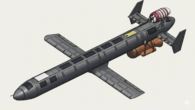
Heaviside, a two-year-old US-Norwegian start-up, has launched the Tyr anti-tank loitering munition. It weighs about 15 pounds, a third of it warhead, derived from Nammo’s M72 light anti-armour weapon and powerful enough to kill a T-72 or T-80 tank. President Nils Haagenrud says the price is well under $100,000, helped by commercial off-the-shelf parts. Tyr navigates by video, fusing electro-optical and infrared sensors. It flies itself to a strike zone chosen by a person, hunts for recognisable targets, then asks permission. “The only thing I have to do is press ‘engage’,” Haagenrud said. Development and live-fire testing take place in Norway, 90 minutes from Nammo, including flights at 20 degrees below zero.
Featured Image – Wikipedia