Russia Now Builds 3,000 Kamikaze Drones A Month
Russia is now producing about 3,000 Geran-4/5 kamikaze drones a month. And: Ukraine’s stealth drone reaches Ufa, Russian subs hide under netting, drone boats hunt troops, a carrier’s new drone hub, an F1-built missile, and NATO’s GPS-free drones.
Russia Builds 3,000 Kamikaze Drones A Month
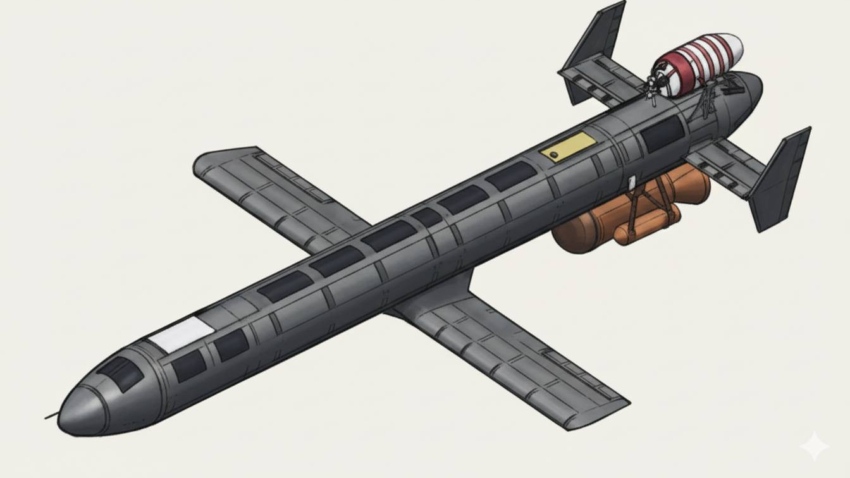
Russia’s defense industry is now producing about 3,000 Geran-4/5 kamikaze drones a month, Ukrainian military intelligence told Militarnyi, with serial production centered at a plant in Tatarstan’s Alabuga Special Economic Zone. The newest Geran-5 variant carries a 90 kilogram warhead out to roughly 1,000 kilometers and can be launched from Su-25 attack aircraft, while satellite imagery shows construction underway to expand the site further. Ukraine’s former armed forces chief has said jet powered variants could soon make up half of Russia’s drone strikes.
Ukraine’s Answer Reaches Ufa In Three Hours
Ukraine’s own deep strike arsenal just got faster. A jet powered drone believed to be Triada Robotics’ Bravo, built with a blended wing body shape similar to the US B-2 stealth bomber, appeared briefly on video during an August 2 strike on the Bashneft refinery cluster at Ufa, 1,700 kilometers inside Russia. Cruising at roughly 600 kilometers per hour, the Bravo can cover that distance in under three hours rather than the nine and a half a propeller driven drone would need, carrying a 100 to 200 kilogram warhead out to 2,000 kilometers.
Russian Submarines Now Hide Under Netting
That reach is changing how Russia protects its most sensitive assets. New satellite imagery shows Russia has fitted anti-drone netting and boom barriers around nuclear powered submarines at its Vilyuchinsk base on the Kamchatka Peninsula, more than 7,200 kilometers from Ukraine. Eight submarines, including three Borei class vessels armed with Bulava intercontinental missiles, now shelter under the netting when moored, evidence Moscow considers even its most remote naval bases within range of Ukrainian drones and uncrewed boats.
Drone Boats Hunt Troop Transports
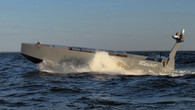
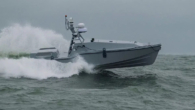
Ukraine is also using naval drones as launch platforms rather than just weapons. Marines from the 40th Brigade’s Barracuda unit sent unmanned surface vessels toward Zaliznyi Port in occupied Kherson, where they released FPV drones that struck Russian boats mid troop rotation. Russian forces destroyed one Barracuda using Geran-4 Seeker interceptor drones, but the rest reached their launch positions, and the brigade says the rotation was disrupted and the landing force destroyed.
A Carrier Gets Its Drone Control Center
The US Navy, meanwhile, is building the infrastructure to fly its own uncrewed aircraft at scale. The USS Theodore Roosevelt has become the first fully operational carrier with a built in Unmanned Air Warfare Center, the control system needed to run Boeing’s MQ-25A Stingray refueling drone. A second center aboard the USS Ronald Reagan is due to be operational by the end of August, nearly eight years after the $805 million development contract was signed.
Airmen Print A Drone And Fly It The Same Day
The Air Force is testing whether that kind of capability can be built faster too. At a Game of Drones event at Edwards Air Force Base in July, manufacturers designed, 3D printed, assembled and flew aircraft within a single day, evaluating them for the Defense Innovation Unit’s Blue List of vetted, foreign component free systems. The approach mirrors how Ukrainian units have modified fixed wing and FPV drones in the field, and feeds into the Pentagon’s wider Drone Dominance initiative to speed up testing and production.
Ex-Formula 1 Engineers Build A Cheap Missile
Britain’s answer is arriving from an unlikely direction. MGI Engineering, a defense firm staffed by former Formula 1 race engineers, says its TigerShark strike drone will be available from October, reaching 750 kilometers per hour and 900 kilometers of range with a 300 kilogram payload for a fraction of the cost of missiles like Storm Shadow. It navigates using inertial guidance and terrain mapping rather than GPS, letting it operate in jammed or spoofed environments, and can launch in salvos from a ground based vehicle.
NATO Tests Drones That Don’t Need GPS Either
That same problem sits at the center of NATO’s own research. At a Netherlands demonstration in July, researchers showed autonomous aircraft and ground systems completing search and rescue and unexploded ordnance tasks without satellite positioning, part of the alliance’s Science for Peace and Security Programme. A student team from City St George’s, University of London won a related competition requiring drones to coordinate and navigate a simulated disaster zone with GPS switched off entirely, the kind of resilience Western militaries are racing to build before it is tested in combat rather than in a field in the Netherlands.
Image – Geran-5/Defence Security Asia