
Kim Jong Un Wants Absolute Superiority In Drones
North Korea unveiled a stealth drone mockup and racks of attack drones as Kim Jong Un demanded absolute superiority. Elsewhere: drone hunters become hunted, a 1,200 km Gerbera, Starlink-free strikes, fibre-optic limits and Oshkosh takes flight.
Pyongyang’s Drone Show
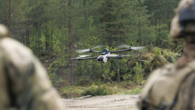
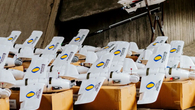
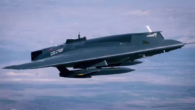
North Korean leader Kim Jong Un has called for his country to seize “absolute superiority” in drone technology, Reuters reports, citing state news agency KCNA. He spoke at the Unmanned Aeronautical Technology Development-2026 exhibition on 29 October and announced unspecified measures to accelerate drone and military AI development. Pride of place went to a mockup of a tailless flying-wing stealth drone with a dorsal air intake and retractable landing gear, reports The War Zone, which notes that resembling a Western stealth design is not the same as matching it. Also on show were armed Saetbyol-9 drones, Switchblade-style loitering munitions and racks of hundreds of small quadcopters. A follow-on firepower demonstration featured suicide drones and 600mm rocket launchers. South Korean intelligence says more than 16,000 North Korean personnel have gone to Russia since October 2024, gaining first-hand experience of drone warfare.
Hunters Become The Hunted
Russia’s mobile fire groups, pickups with machine guns escorting fuel convoys to occupied Crimea, have become prime targets themselves, writes David Hambling for Forbes. They were fielded this year against medium-range strike drones such as the US-made Hornet from Perennial Autonomy, a 30-pound drone with a seven-foot wingspan that cruises at around 70 mph. Videos show crews facing forward, unaware of drones closing from behind, or bailing out seconds before impact rather than shooting. A Hornet presents about one square foot head-on, against 40 for a Second World War Bf 110, and the gunners use much the same weapons. Hambling draws the parallel with RAF tail gunners, who made up some 40% of aircrew casualties. For now, many of these vehicles stop just one drone, the one that destroys them.
The Decoy Grows Up
The Gerbera, built as a cheap decoy to soak up air defences, has grown into something far more capable, Ukraine’s Military Intelligence Directorate (HUR) says in a teardown published on its WarSanctions portal. The enlarged Gerbera-2 has a 3-metre wingspan and a 63-litre fuel tank, giving a range of up to 1,200 kilometres. Its two-stroke engine is effectively half of the Geran-2’s. The examined drone carried a 10-kilogram fragmentation-incendiary warhead, though Russia claims up to 25 kilograms. The electronics include a 12-channel Kometa satellite navigation antenna, a mesh modem from China’s Shenzhen Sinosun Technology and a dual camera to spot interceptor drones. Eight of the components were Chinese and four American. A Gerbera-2 with a warhead was found on Poland’s Baltic coast in mid-September.
Strikes Without Starlink
Fire Point, maker of Ukraine’s FP-series strike drones and missiles, says its long-range systems can now finish missions without a satellite link. Chief executive Iryna Terekh told Reuters the workaround delivers only 15% to 20% of what full Starlink coverage over Russia would allow, and called for a predictable US-Ukraine agreement on satellite communications. That follows ten days in October when SpaceX cut connectivity for drones flying faster than 160 km/h. Fire Point’s FP-7 ballistic missile, with a range of about 300 kilometres, made its combat debut on 1 October after about two years and roughly $200 million of development. Terekh pitches it against Iskander launchers that move before slower drones arrive. The company also coordinates Freyja, a European anti-ballistic interceptor due to make a live intercept by mid-2027.
How Far Is Far Enough
Ukraine’s fibre-optic drones, immune to radio jamming because commands and video travel down a cable, keep flying farther, but maker TechEx is questioning the next jump. It already builds models reaching 35 to 40 kilometres. Going to 45 or 50 kilometres means a heavier spool and bigger batteries to lift it, eating into payload, an executive identified only as Oleg told Business Insider. Some makers argue shorter ranges work better anyway, because long cables are more likely to break. TechEx has trimmed spool weight by changing how the fibre is wound, and Ukraine’s Defence Ministry credits its Stalker series with a record-low spool weight. Its technical support team works with more than 100 units, feeding weekly product changes, and field feedback made its Striker interceptor far smaller than the prototype.
Trucks That Fly
Oshkosh Defense, best known for military trucks, will build large drones for the first time, partnering with Silicon Valley start-up Grid Aero. Founded in 2024, Grid Aero makes the Lifter, an autonomous modular cargo aircraft it calls a pickup truck of the skies, in the Group 4 or Group 5 drone classes above 1,320 pounds. It is piston-powered and built from metal rather than composites, which suits Oshkosh’s factories. The partnership grew out of the Pentagon’s Arsenal of Freedom push to expand the industrial base. Grid Aero will run low-rate production while Oshkosh sets up a pilot line, with production moving to Oshkosh in stages as demand grows. The companies talk of building thousands for the Pentagon and commercial customers.
Featured Image – Current supreme leader of North Korea and General Secretary of the Workers’ Party of Korea Kim Jong Un – Wikipedia