Congress Asks Whether Humans Can Keep Up With AI Targeting
Congress hears AI can outpace human oversight, a fatal strike shows this is real. Plus: British Army operates a drone swarm, Watchkeeper replaced, a Mojave lands on rough ground, France disperses its tanks, detecting silent drones, & F-16s share targeting data.
Congress Asks Whether Humans Can Keep Up
Witnesses told the Tom Lantos Human Rights Commission this week that AI enabled targeting can move faster than a human overseeing it can meaningfully authenticate, with Amnesty International’s Amanda Klasing warning the technology can compress the kill chain in ways that obscure whether real human judgement occurred before a strike. The hearing referenced a March strike on a school in Minab, Iran, that killed more than 168 people, over 100 of them children, with lawmakers still awaiting a Pentagon investigation into whether AI systems like Maven contributed to the target selection, a case witnesses said illustrates the gap between requiring a human to approve a strike and confirming that human genuinely had the time and information to catch a mistake.
A Fatal Strike Shows What Full Autonomy Already Looks Like
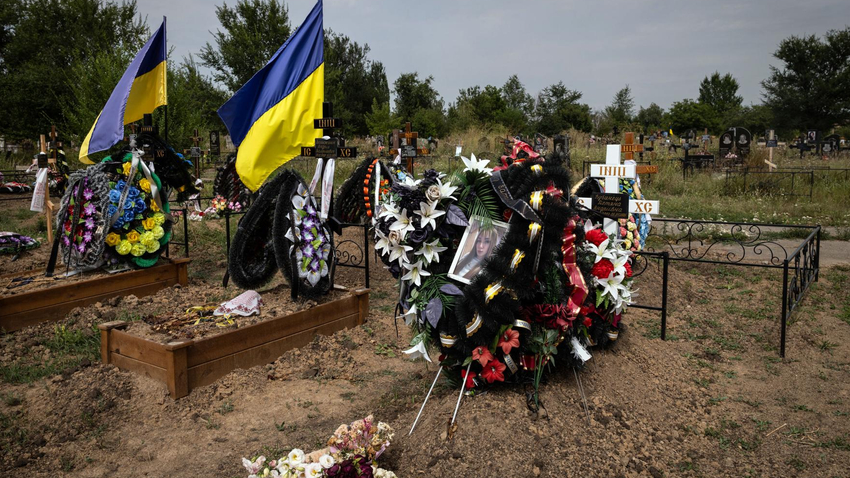
The stakes behind that warning are already concrete. On July 6, 18 year old accounting student Tetiana Bubynets was killed alongside two other civilians by a Russian drone strike on a Zaporizhzhia gas station. A New York Times analysis found the drone was Russia’s first confirmed use of a fully autonomous attack drone, guided by a commercial Nvidia minicomputer that let it identify, lock onto and strike a target, likely propane tanks, without a live connection. Analysts say both Russia and Ukraine are racing to build the wider reconnaissance strike architecture around such drones, compressing the time between a sensor spotting a target and a weapon hitting it to minutes, with Ukrainian AI governance researcher Anna Mysyshyn warning that “the approval button alone does not demonstrate control” once decisions move that fast.
Britain Hands Its Army A Working Drone Swarm
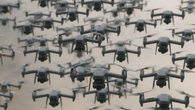
Away from questions of accountability, militaries are still racing to build the hardware itself. The UK’s Defence Science and Technology Laboratory has completed the first phase of its Software Defined Swarms Concept Demonstrator, handing the British Army a Swarm Capability Test Bed after eight weeks of experimentation with eight collectively controlled drones. Two rival control systems, one from Saab’s BlueBear and another from the Disruptor Group led by Applied Intuition, were tested against representative battlefield tasks in what Dstl calls the UK’s first high technology readiness swarm demonstrations. Brigadier Kieran Sheldon, the Army’s head of military capability planning, said the open architecture behind the system could extend to ground robots and uncrewed boats as well as drones, with further trials planned through 2027.
A Battle Tested Drone Replaces A Troubled One
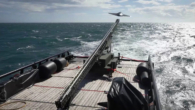
Britain is pairing that experimentation with a concrete procurement decision. The Army will bring the Tekever AR5 into service under a contract worth up to £400 million, replacing the Watchkeeper system that entered service in 2014 after a famously over budget and delayed development. The AR5, a long endurance surveillance aircraft already used by Ukraine against Russia, will be built at a new Tekever factory in Swindon supporting more than 1,000 jobs, alongside a separate £16 million deal delivering over a thousand small drones from three British companies as part of the Army’s Project Rapstone.
A Drone The Size Of A Fighter Lands On A Dirt Trail
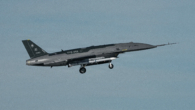
Half a world away, General Atomics and Hanwha Aerospace demonstrated a different kind of flexibility. A Mojave short take-off and landing aircraft landed on a rough manoeuvre trail used by South Korean tanks during a live fire exercise near Seoul, then took off again to continue its mission, the first time an aircraft of its size and endurance has operated from a simulated battlefield rather than a prepared runway. The company says troops could refuel and rearm the aircraft on the spot in a real operation, letting it disperse away from the small number of airfields an adversary could otherwise target and strike.
France Tries To Make Its Tanks Boring Enough To Ignore
The French Army is chasing survivability through a different route: making itself an uninteresting target. The 7th Armored Brigade has been testing smaller, modular “Lego brick” formations of Leclerc tanks and light vehicles that can combine or disperse depending on the mission, reasoning that an adversary is less likely to spend a scarce drone or missile on just one or two vehicles. Commander General Maxime Do Tran said the approach demands more autonomy from junior commanders and may eventually mean swapping a tank’s main gun for a counter drone system or loitering munition launcher, since “direct fire from one cannon to another” may be disappearing from the battlefield.
A Laser Layer Joins The Hunt For Silent Drones
Detecting the drones behind all this caution is its own arms race. AEye and Swedish firm Swiftstrike AI are integrating AEye’s STRATOS lidar into Swiftstrike’s autonomous counter drone systems, adding a sensor that can spot small aircraft nearly a mile away using laser pulses rather than radio signals, useful against drones that no longer broadcast a conventional signature. The higher resolution sensor is built to help distinguish a genuine aerial target from clutter and deliver more precise range, altitude and speed data before a kinetic response is triggered.
Two Fighter Jets Learn To Share What They See
Lockheed Martin has tested a similar idea in the air, flying two F-16s fitted with Legion infrared sensors and a pre-production version of L3Harris’s HiveLink networking system over Tucson, Arizona. The link let the jets exchange passive infrared tracking data mid flight, improving each aircraft’s estimate of a target’s range and position without needing to switch on a radar that could give its own position away, a capability Lockheed says will eventually extend to teaming crewed fighters with uncrewed aircraft.
Featured Image – The grave of Tetiana Bubynets, who was killed in July 2026 in a drone strike on a gas station in Zaporizhzhia, Ukraine. An attack by what Ukrainian officials said was a Russian drone with an Nvidia chip – Nicole Tung/The New York Times