RAF Chief Calls For Autonomy, Not Flesh
The RAF chief wants four AI-enabled drones flying with every Typhoon, and a new doctrine he calls autonomy, not flesh. Also: China’s drone ship, a 100-a-day launch base, AI takes the last 500 metres, Marine FPV teams and wire-laying robots.
Autonomy, Not Flesh
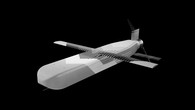
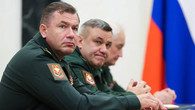
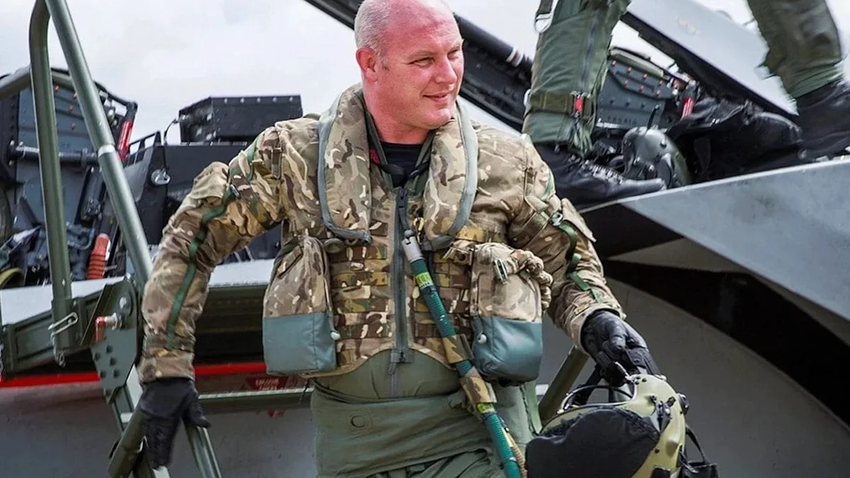
The Royal Air Force’s future will rest on “autonomy, not flesh”, UK Chief of the Air Staff Air Chief Marshal Sir Harv Smyth told the Royal United Services Institute (RUSI) on 26 October, echoing the Allies’ Second World War doctrine of steel, not flesh. Under the £300 million Storm Fighter programme, four armed, AI-enabled uncrewed aircraft would fly alongside every Typhoon, with tests next year and service by the end of the decade. One scenario has drones tracking Russian aircraft in the Greenland-Iceland-UK gap, controlled from a Typhoon over Scotland. Smyth said AI agents fighting each other in a simulation for 14 days had accrued the equivalent of 50 years of human air combat experience. Yet he quoted Top Gun: Maverick to insist fighter pilots are not finished, calling it a question of balance between crewed and uncrewed. RAF trained strength has fallen from 29,800 in 2020 to 27,850.
China’s Drone Ship
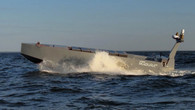
China’s People’s Liberation Army (PLA) says a GJ-21 stealthy flying-wing combat drone has launched from and landed on the Type 076 amphibious assault ship Sichuan. No photos, video, date or location have been released, reports The War Zone. Satellite imagery shows Sichuan left its Shanghai shipyard berth between 13 and 17 October and returned around 26 October. The Type 076 is unlike any other big-deck amphibious ship, with an electromagnetic catapult, and the GJ-21 differs from the land-based GJ-11 by a catapult bar on its nose gear. Fittings for three arresting cables are now visible on deck. If confirmed, the PLA Navy looks set to be the first to field an operational ship-based uncrewed combat air vehicle, a capability the US Navy came close to in the late 2010s and then abandoned.
A Hundred A Day
Russia is building a launch site for jet-powered attack drones 3.5 kilometres from Millerovo airfield in the Rostov region, Ukraine’s Military Intelligence Directorate (HUR) said on 28 October. Satellite imagery showed no construction in late August, but launch positions were in place by mid-October. HUR estimates the site could support up to 100 launches a day, likely of Geran-4 and Geran-5 drones, sheltering under the airfield’s air defences. It cautions that the real rate depends on drones, fuel, warheads and trained crews. Russia operates at least 12 permanent launch sites and was producing around 2,000 Geran-4s and Geran-5s a month in early October. The Geran-4 now has optical terrain-matching navigation and a warhead designed for bridges and power pylons.
The Last 500 Metres
Ukrainian firm The Fourth Law’s Lupynis-10-TFL-1 is now used by dozens of Ukrainian units, NPR reports. It pairs a cheap first-person-view (FPV) drone with an onboard computer that takes over for the final 500 metres. A pilot flies it towards the target and selects it. Once the system locks on, the pilot lets go of the controls and the drone finishes the attack itself. Its neural network is trained on hours of combat footage to recognise vehicles, armour and aircraft, and the terminal autonomy makes it hard to jam. Founder Yaroslav Azhnyuk, who previously built AI pet cameras, says humans still choose the targets, but concedes that drones designating their own targets are not unthinkable. President Zelenskyy has warned that AI could lead battlefield decisions as soon as next year.
Sergeants At The Sticks
US Marines have flown the Neros Archer FPV attack drone in live fire for the first time, at Camp Fuji in Japan on 20 October. Battalion Landing Team 1/1 of the 31st Marine Expeditionary Unit flew two strike missions, including an anti-armour ambush, as a proof of concept for its hunter-killer teams. In that concept, a surveillance drone finds and tracks targets and passes coordinates to an FPV pilot. Both targets were destroyed. Archer is the Corps’ programme of record for one-way attack drones, flown by lance corporals to sergeants after a three-week course with no drone experience required. Marines have also launched Archers from small craft off Okinawa, and flew about 140 sorties, including night strikes with thermal cameras, at the Drone Crucible exercise in Florida.
Robots String The Wire
Ukraine’s 16th Separate Support Brigade is using a six-wheeled ground robot to lay wire obstacles in exposed positions while its operators stay under cover. A sloping frame above the wheels lets the coils unwind as the vehicle moves forward, taking over a job that leaves combat engineers badly exposed. The maker, model, payload and range have not been disclosed, nor how many are in service. The wider trend is clearer. Ukraine’s DELTA battle management system recorded 19,940 ground-robot missions in July, up from 7,511 in January, with about 112,000 recorded by the start of September. Those figures cover all ground-robot work, not wire laying alone.
Featured Image – Chief of the Air Staff Air Chief Marshal Sir Harv Smyth – RAF