A British Carrier Launches Strike Drones
The Royal Navy launched four Nyan strike drones from HMS Queen Elizabeth, and all four reached their targets. Plus: AI flies a Gripen, 25,000 systems for CENTCOM, a TB2 mothership, gun turrets versus Gerans and drone-heavy Sandhurst.
Strike Drones Off The Deck
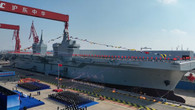
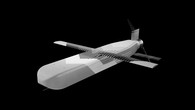
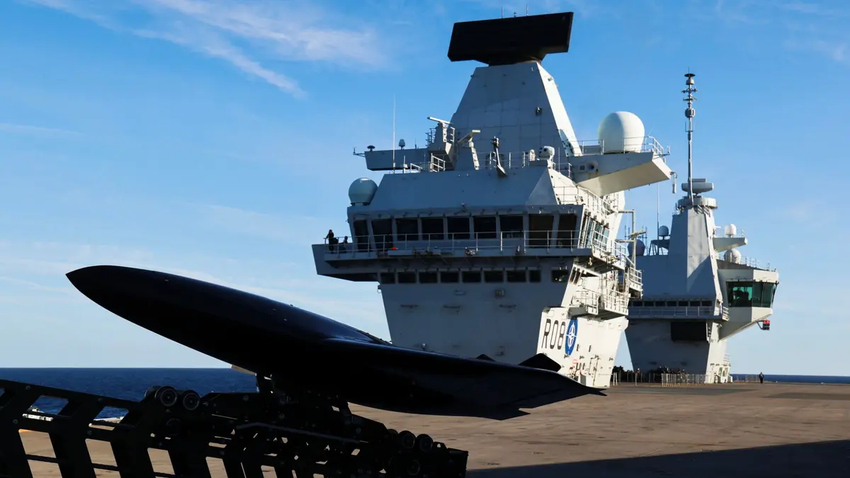
The Royal Navy has launched BAE Systems’ Nyan one-way effector four times from HMS Queen Elizabeth, and BAE says all four reached their designated strike points. The trials ran in the North Atlantic during Exercise Neptune Reach B, which explores how uncrewed weapons could support future carrier strike operations. Nyan, built by BAE subsidiary Callen-Lenz, has a 2.9-metre wingspan and is designed to strike rather than return. It first flew at sea from the experimental vessel XV Patrick Blackett earlier this year. The carrier also hosted a Tekever AR5 fixed-wing drone, with a 7-metre wingspan and an 80-kilogram payload, during the Heavy Lift Challenge 3 trials. The work falls under Project Vantage, which spans all three services, and feeds the Maritime Aviation Transformation programme towards a hybrid navy. No operational deployment date has been set.
The AI In The Gripen
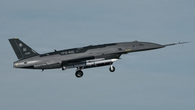
Saab says its own AI agent has autonomously controlled a Gripen E fighter in beyond-visual-range combat scenarios, validating that capability in real flight. The company built the agents, their training environments and supporting tools in-house, which it says gives it control over how the software behaves, how it is verified and how it is updated. The agents train in Saab’s AI Fighter Pilot Academy, accumulating millions of simulated flight hours with their actions scored against set objectives. Gripen E’s software-defined architecture lets new AI software fly on an operational fighter rather than a dedicated test aircraft, shortening development cycles. Saab says safety and control are built in from the start, and its computing comes from Sferical AI, a Swedish sovereign AI initiative it co-founded. Saab did not say how many flights took place or how the scenarios were scored.
Mass For The Middle East
The Pentagon says its unmanned systems office has delivered more than 25,000 drones and counter-drone systems to US Central Command (CENTCOM) this year, for about $782 million. The tally covers more than 1,300 one-way attack drones, more than 100 uncrewed surface and underwater vessels, and more than 24,000 counter-drone systems, fielded through Joint Interagency Task Force 401. Owen West, who leads both the office and Project Agincourt, framed it as a shift from multi-year development to a warfighting acquisition model, with cheap systems replacing multi-million-dollar munitions. The effort is the foundation for the four-star Autonomous Warfare Command due by 1 October 2027, and deliveries are to expand to the Pacific and European commands. The announcement did not name suppliers or say how the systems have performed.
A Mothership From Baykar
Baykar has turned its Bayraktar TB2 into a carrier for first-person-view (FPV) attack drones. In a test released on 4 November, a TB2 carried 16 Skydagger FPV drones, eight under each wing, flew from the Keşan test centre and released two, which operators steered into their targets through the TB2’s data link. Baykar did not say what happened to the other 14. Chief executive Haluk Bayraktar said FPV drones normally reach about 15 kilometres, and that relaying their signals through a TB2 could extend that to thousands of kilometres. That depends on the TB2’s own range and links, and Baykar has published no data on flight time after release or how many drones can be controlled at once. The company began the work in 2024 with Croatian maker ORQA.
Machine Guns Versus Gerans
Ukraine is working to link its NASAMS, IRIS-T and other missile systems into one tactical network, Defence Minister Yevhen Khmara said after visiting air defence units. Robotic turrets have already shot down jet-powered Geran-4 and Geran-5 drones, he added. One such turret, Sky Sentinel, mounts a 12.7mm M2 Browning on a rotating platform, with AI machine vision that tracks targets and calculates lead while a human authorises fire. Russian-language outlet Voennoe Delo highlights its limits. Its effective range is about 1.5 kilometres, so a drone flying at 2 to 2.5 kilometres passes overhead untouched. Air Force spokesman Yuriy Cherevashenko has put the average success rate of automated turrets at 28%. Each Sky Sentinel costs about $150,000, and the UNITED24 platform has raised about $3.3 million for 22 of them.
Sandhurst Looks Up
A Ukrainian platoon commander fresh from two years at the front has watched a Royal Military Academy Sandhurst exercise on Salisbury Plain, and he wants more pressure from above. Nearly 400 officer cadets, 23 of them international, dug L-shaped trenches in woodland, concealed themselves and fought off Gurkhas playing the enemy with FPV drones, all on little sleep. It is the first time the drills have changed in decades, replacing exposed trenches in open fields. The observer, known as Zero and himself a 2022 Sandhurst graduate, welcomed the change but said drone pressure must increase many times over, because cadets still dig without thinking about the threat overhead. One cadet called the exercise refreshingly modern and relevant.
Featured Image – BAE Systems