
Russia Gives Its Drones A Military Branch Of Their Own
Russia has installed a general to lead its new drone branch as jet drones outpace Ukraine’s interceptors. And: an Mi-8 launches interceptors, Soviet BRDM-2s become robots, Saab’s stealthy supersonic drone, and Japan’s defence giants join the race.
Russia Gives Its Drones A Military Branch
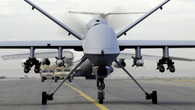
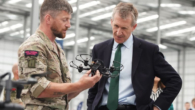
Russia has formally installed General Denis Lyamin (far left) as head of a new Unmanned Systems Forces branch, elevating drones from a capability scattered across infantry, artillery and electronic warfare units into a dedicated command with its own doctrine and training pipeline. Lyamin, a tank school graduate who most recently served as chief of staff for Russia’s Centre Group of Forces in Ukraine, was personally selected by Putin. Ukraine created a comparable “long range impact” command in July, and a Pentagon official has told Reuters Ukraine alone is expected to produce 6 to 7 million small FPV drones this year.
Russia’s Drones Are Getting Faster Than Ukraine Can Shoot Down
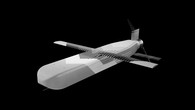
That reorganisation comes as the underlying fight accelerates. Russia’s jet powered Geran-4 and Geran-5 drones, which travel at 500 to 600 kilometers per hour against the piston engined Geran-2’s 185, have now overtaken the older model in monthly production, and Ukraine’s Air Force says up to two thirds of drones launched on some days are jet powered. Ukraine’s FPV interceptors achieved shoot down rates near 95% against the older drones, but the newer ones are outrunning them, forcing engineers to race jet powered interceptors like the newly fielded Alexa Spatium into service instead.
A Helicopter Learns To Launch Its Own Interceptors
Ukraine is also finding new ways to get interceptors into the air faster. Footage shown during President Volodymyr Zelensky’s Independence Day address revealed an Mi-8 helicopter fitted with launch rails carrying up to six interceptor drones under its hardpoints, following a similar conversion of an Antonov An-28 transport plane that has destroyed more than 200 drones since entering service. Using an aircraft already airborne gives crews altitude and loiter time to vector toward a target rather than waiting for a ground launch.
Old Armor Gets A Second Life As A Robot
The same instinct to keep people out of the line of fire is reaching into Ukraine’s vehicle stockpiles too. The armed forces are converting Soviet era BRDM-2 armored scout vehicles into remote controlled combat platforms, replacing the original gasoline engine with a foreign built diesel, adding a remote weapons module of at least 12.7 millimeters, and targeting control from up to 1,000 kilometers away. Officials say one recent battlefield episode has pushed the programme’s timeline forward, though no service date has been set.
Sweden Shows Its Hand On A High End Wingman
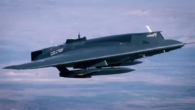
Elsewhere the drone race is aiming higher rather than cheaper. Saab has unveiled a full scale mock-up of a stealthy, supersonic collaborative combat drone it calls aircraft A3, designed to fly alongside the Gripen E and positioned as a more advanced alternative to the US Air Force’s current CCA designs. Two flying demonstrators, A1 and A2, are funded through 2030 and share the Gripen’s F414 engine, and Saab estimates a production version could cost about a third of a Gripen’s life cycle cost, letting an air force field two or three for every crewed fighter.
Japan’s Big Contractors Join The Race
Japan’s major defence primes are moving too. Mitsubishi Heavy Industries says it built a prototype interceptor drone in three months by drawing on its helicopter engineering base rather than starting from scratch, and plans small batch production runs it can continually revise using lessons from active conflicts. Kawasaki Heavy Industries is working with Airbus on an uncrewed aircraft carrying submarine detection equipment for Japan’s navy, part of a government backed push the country’s 2026 defence white paper frames as adopting private sector innovation, even as partnerships between contractors and civilian drone makers draw public pushback at home.
Image – RIA Novosti/Alexander Kazakov