Nearly 2,000 Drones Descend On A NATO Exercise In Germany
Germany’s Saber Junction exercise fielded nearly 2,000 autonomous systems, the most in its history. Elsewhere: Switzerland builds a drone battalion, Taiwan fights over drone spending, Ukraine’s balloon drones, and Dutch and Italian interceptor buys.
Nearly 2,000 Drones Descend On A NATO Exercise
This year’s Saber Junction exercise in Germany has fielded around 1,900 autonomous systems against the participating troops, the largest drone presence in the exercise’s history according to 7th Army Training Command commander Brigadier General Terry Tillis. The opposition force’s new reconnaissance unit, Eerie Company, stood up in January, is flying Skydio X10s, Vesper and eBee Vision drones alongside Neros Archer FPV attack drones and inflatable decoys meant to confuse them, while soldiers test EchoShield radar and Mk4 jamming guns against the onslaught. A battalion from the same 173rd Airborne Brigade that the US Army recently ordered to drop its dedicated drone focus is presenting what it learned from Ukraine during the exercise, even as its parent unit winds the programme down.
Switzerland Builds A Drone Battalion From Scratch
Away from the exercise ground, entire militaries are still standing up the capability Saber Junction is testing. Switzerland’s defence ministry says it will field its own drone battalion for reconnaissance, operations and defence from 2028, backed by a new civilian military centre pairing a technology hub with a military command to develop and test systems quickly. The country has recorded a rising number of drone flights over military and critical infrastructure sites and has already introduced its first dedicated counter drone system, part of a broader European rearmament trend the ministry says has made drones and robotics a strategic priority for a country whose neutrality dates to 1516.
Taiwan’s Politicians Fight Over How Fast To Build
The disagreement in Taipei is not whether to build a drone force but how much to spend doing it. Taiwan’s opposition controlled parliament rejected the government’s NT$210 billion special budget for roughly 210,000 drones through 2031, instead passing its own plan capping annual spending at NT$40 billion, a figure the defence ministry says is too low to build serious combat capability given it already planned to spend NT$42.1 billion on drones in 2027 alone. The government cited lessons from Ukraine and Iran on the importance of uncrewed weapons against a rising threat from China, while opposition lawmakers argued the larger budget lacked proper oversight.
Britain’s Navy Keeps Testing Its Way To An Answer
Britain’s Royal Navy is taking a slower, more deliberate route to the same questions. First Sea Lord General Sir Gwyn Jenkins told the Council on Geostrategy’s Defence Talks podcast that a series of navy wide war games testing the planned hybrid fleet keep returning the same answer: crewed warships are still needed, just further back and coordinating the uncrewed systems around them rather than operating alone. He called what Ukraine achieved against Russia’s Black Sea Fleet a wake up call for every Western navy, while cautioning against reading the Black Sea’s geography directly across to the open Atlantic, where British forces operate.
Ukraine Turns Weather Balloons Into Drone Taxis
Ukraine, meanwhile, keeps finding cheaper ways to extend what it already has. Ukrainian forces have launched more than 1,000 balloons into Russian territory since the autumn, using them to drop small munitions, draw Russian air defenses onto false targets, and relay radio signals to drones. The most novel use lifts a drone to altitude and releases it to glide toward its target, reportedly carrying an American made Hornet drone 42 kilometers before release at around 8 kilometers, using just 5% of its battery in transit and roughly doubling the drone’s normal 150 kilometer range for the mission that followed.
The Dutch Navy Buys Interceptors Instead Of Missiles
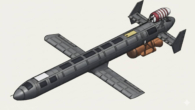
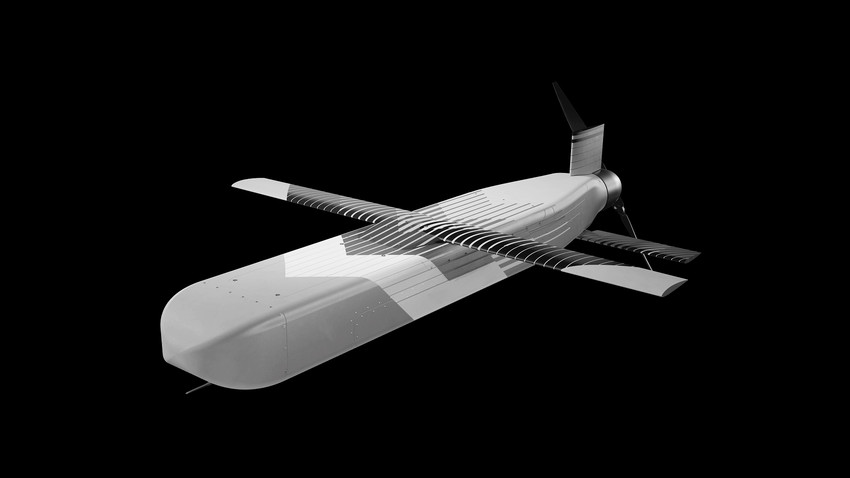
Western navies are chasing the same cost logic Ukraine has been proving on land. The Royal Netherlands Navy will equip its fleet with Destinus’s Hornet B2 interceptor drone, a rocket boosted system that deploys wings and switches to electric cruise flight before using infrared sensing to close on a target, aimed at replacing the multimillion euro missiles ships currently fire at cheap drones. Integration across several warships is due to complete by the second quarter of 2027, with the Dutch Ministry of Defence citing rising medium range drone threats identified in its own operational analysis.
Italy Turns Dumb Missiles Into Smart Ones Instead
Italy is solving the same economics from the opposite direction, upgrading munitions it already owns rather than buying new interceptors. The US State Department has approved a $364 million sale of BAE Systems’ APKWS guidance kits, which slot between an unguided rocket’s motor and warhead and use laser seekers on four fold out wings to turn a sub €100,000 missile into a precision weapon a tenth the cost of an AMRAAM. The kits would likely arm Italy’s Eurofighters, which already fly NATO air policing missions and this month shot down a drone that strayed into Latvian airspace, following Britain’s own two month rush to fit the same system to its RAF jets in May.
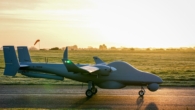
Featured Image – Destinus and the Netherlands Ministry of Defence have launched a Concept Development & Evaluation programme to test the Hornet B2 (shown) kinetic counter-UAS interceptor aboard Royal Netherlands Navy warships through Q2 2027/Destinus