
From Washington to Kharkiv, Military AI Moves Forward
Trump’s new directive puts commercial AI on the Pentagon’s classified networks, with strings attached. Elsewhere: Ukraine automates the Shahed hunt, a drone carrier on the Dnipro, Kyiv’s 2,000 km ambition, Russia’s AI tank talk, and Britain’s first ground drones.
Trump Signs Order to Accelerate Military AI ·
On 5 June, President Trump signed National Security Presidential Memorandum 11 (NSPM-11), directing the US national security enterprise to accelerate AI adoption across defence and intelligence functions. The memorandum orders rapid onboarding of advanced AI models from multiple commercial vendors on classified networks, a buildout of high-security computing facilities, and the creation of an AI National Security Strategic Reserve of senior non-governmental experts. It also directs the Secretary of Defense to issue an updated autonomy-in-weapons directive and explicitly states that no commercial entity can disable or modify a fielded AI system without prior government approval. The directive rescinds the Biden administration’s NSM-25. Several senior military leaders have publicly urged caution on battlefield autonomy; the memorandum’s language on steerability and chain-of-command oversight appears aimed at addressing those concerns without slowing the programme.
AI Pushes Deeper Into Ukraine’s Kill Chain
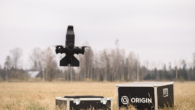
The policy ambition encoded in NSPM-11 is already operational reality on Ukrainian battlefields. Ukraine’s Brave1 defence technology cluster has automated 95% of the process of shooting down Russian Shahed drones, from the moment a drone launches to its destruction. The system was combat-tested in the Kharkiv region and is now being scaled up for wider deployment. The operator selects a target and authorises engagement; after that, the interceptor drone guides itself to the Shahed, identifies it autonomously, and homes in. Mykhailo Fedorov, Ukraine’s Minister of Defense, noted the developer went from prototype to combat deployment in under a year under Brave1’s support structure.
Ukraine’s Drone Carrier at Sea
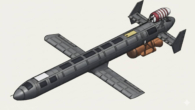
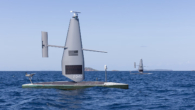
The same pressure to automate interception is driving Ukrainian innovation at the waterline. MAC HUB has unveiled the Katran X1.2, a 9.1-metre uncrewed surface vessel designed to act as a floating launch platform for swarms of AI-guided interceptor drones. During trials on the Dnipro River in May, the boat carried 27 of the company’s MAC Dead Fly interceptors, exceeding its own published specification of 23. The Dead Fly is designed to reach speeds of up to 380 km/h and autonomously track airborne targets; engineers are working toward 450 km/h. Russian Shahed drones routinely follow Ukrainian river corridors toward Kyiv and other cities, so a vessel that can reposition along those routes places interceptors directly in their path. The Katran can also reconfigure to carry strike drones, fixed-wing aircraft, and two R-73 air-to-air missiles, giving a single platform a broad mission envelope across counter-drone, strike, and maritime patrol roles.
Ukraine’s 2,000km Strike Horizon
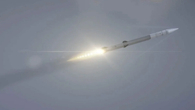
Ukraine’s commander-in-chief, General Oleksandr Syrskyi, has approved a formal development concept for Ukraine’s rocket forces and artillery running through 2030. The most significant figure in the document is 2,000 km: the declared target strike radius Ukraine intends to achieve by combining domestically produced ballistic and cruise missiles with uncrewed systems. The distance from Ukraine’s eastern border to Moscow is approximately 450 km, meaning a 2,000 km capability would place virtually all of Russia’s European territory within reach. The concept also commits to phasing out Soviet-era artillery systems, reducing dependence on partner-supplied munitions, and investing in drone-enabled artillery reconnaissance, which Syrskyi identifies as the single largest lever on Ukrainian fires effectiveness. Syrskyi challenged the view precision strike systems and drones are rendering traditional artillery obsolete, and that artillery retains unique advantages operating in all weather conditions, functions regardless of terrain, and can respond to threats and changing situations faster than most other fire support options.
Russia’s Robotic Tank Aspiration
Russia is moving in a roughly parallel direction, with less evidence of concrete progress. Uralvagonzavod director general Alexander Potapov has publicly floated the idea of a next-generation main battle tank built around artificial intelligence and high-level robotisation, drawing on lessons from four years of combat in Ukraine and on the existing T-90 programme. The T-14 Armata, once marketed as Russia’s future of armoured warfare, has effectively been confined to parade duties; Rostec has previously acknowledged it is too expensive for large-scale procurement. Russian industry has struggled throughout the war to counter the basic threat from first-person-view (FPV) drones, often relying on field-improvised cage armour rather than the active protection systems that would underpin an advanced platform. Potapov gave no design specifics.
Britain’s First Ground Drone Fleet
Away from the front lines, the British Army has placed its first operational order for unmanned ground vehicles (UGVs). Digital Concepts Engineering (DCE) has been contracted to deliver 15 of its X Series Universal Carrier platforms, which the Ministry of Defence described as the UK’s largest ground drone procurement to date. Financial terms were not disclosed. The order marks a shift from years of trials and demonstration events toward an actual fielded capability, though 15 vehicles is a modest number relative to the scale of UGV programmes in Ukraine or those being evaluated by the US Army.
Image – EPA/Bonnie Cash / Pool