
Ukraine Turns the Drone War Inside Out
A $25 wing kit just sent a Ukrainian FPV drone 102 km behind Russian lines, and both sides know what comes next. Plus: the AI finding gaps in Russian air defences, fire at Putin’s showcase forum, Denmark’s sea swarms, and London’s quiet kill-chain row.
The hundred-kilometre FPV ·
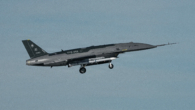
A quadcopter first-person view (FPV) drone reaching a target 102 kilometres behind Russian lines would have seemed implausible eighteen months ago. It is now documented fact. Serhii Sternenko, drone fundraiser and adviser to Ukraine’s Ministry of Defence, posted video this week of a winged FPV striking a Russian logistics van well beyond what was considered the practical limit for rotary-wing platforms. The secret is a detachable wing kit that costs around $25 to add to a standard $500–$640 FPV drone. By providing lift during the transit phase, the motors focus entirely on propulsion rather than fighting gravity; when the drone reaches the target area, the wing detaches and the quadcopter recovers its full manoeuvrability for the terminal attack. Roy Gardiner, an OSINT analyst and former Canadian Armed Forces officer whose group Defence Tech for Ukraine has developed a similar system, calls it “the best of both worlds.” The Russians have reached the same conclusion, fielding a ring-wing FPV known as the KVS that roughly triples their standard range to 50 kilometres. Both sides are at version 1.0. The implications for rear-area logistics, which have until now sat beyond FPV threat, are significant.
AI finds the gaps
Ukraine is also developing the intelligence layer to exploit those longer ranges. According to reporting by Kyiv Post, Ukraine’s Deep Strike unit is using AI — reportedly linked to Palantir’s PRISMA platform — to process real-time radar and interception data and route drones through gaps in Russian air defences. Some drones carry warheads; others fly empty as decoys to exhaust interceptors and reveal coverage patterns. The unit commander, known only as Vector, described a decentralised structure operating from dozens of locations and managing thousands of UAVs simultaneously. Around 200 drones were being prepared for a single night’s launch when CNN journalists visited. The combination of AI-optimised routing and massed swarms is turning long-range strikes from a resource-intensive exception into a repeatable tactic.
St Petersburg burns, Odesa prepares
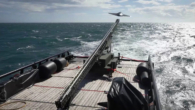
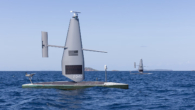
The operational effect was visible on 3 June, when Ukrainian drones struck oil storage facilities and the Kronstadt naval base outside St Petersburg, setting a corvette on fire as guests arrived for Russia’s flagship economic forum. The strikes reached targets more than 1,100 kilometres from Ukraine’s border. Meanwhile at sea, a Danish startup is developing autonomous naval vessel swarms to form a protective barrier off Odesa, with the first armed squadron expected operational by early 2027.
London’s uncomfortable question
In London, the developments are prompting a quiet policy argument. Some UK defence officials are pushing to remove the requirement for human approval before a weapon engages a target, according to the Financial Times. The parliamentary under-secretary Al Carns has publicly maintained that a human must remain in the loop. But the gap between that principle and what is happening on Ukrainian battlefields is widening by the week.
Image – Novaya Gazeta Europe