Britain Looks to Uncrewed Systems as its Crewed Systems Falter
General Sir Roly Walker states half of the British Army’s entire capital budget will go to consumables and uncrewed systems by 2030, and every soldier must be able to operate a drone. Defence Secretary Jarvis followed with a formal commitment to uncrewed ground vehicles and £752m of Ukrainian kit. Also: ASGARD now prosecutes 240 targets a day, the Challenger 3 gearbox has halted production, the entire SSN fleet is alongside, and the MoD is quietly building machine vision into its one-way attack drones.
Walker’s Number That Changes the Debate
The most significant statement at the RUSI Land Warfare Conference on 23 June was not about a new weapons programme. It was an accounting formula. Walker has previously argued for a 20:40:40 force: 20 percent high-end survivable platforms, 40 percent attritable autonomous systems, and 40 percent mass conventional force. Now he has a budget mechanism to back it. He told chiefs from 42 nations that 50 percent of the Army’s capital budget will go toward the sophisticated, survivable 20 percent of the force, while the remaining 50 percent funds the mass of the other 80. This is a profound structural shift for an institution historically weighted toward expensive, low-volume platforms, and “by 2030, it needs to be unmistakable,” he said.
Drones, Ground Robots, and Jarvis
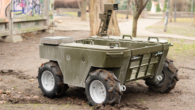
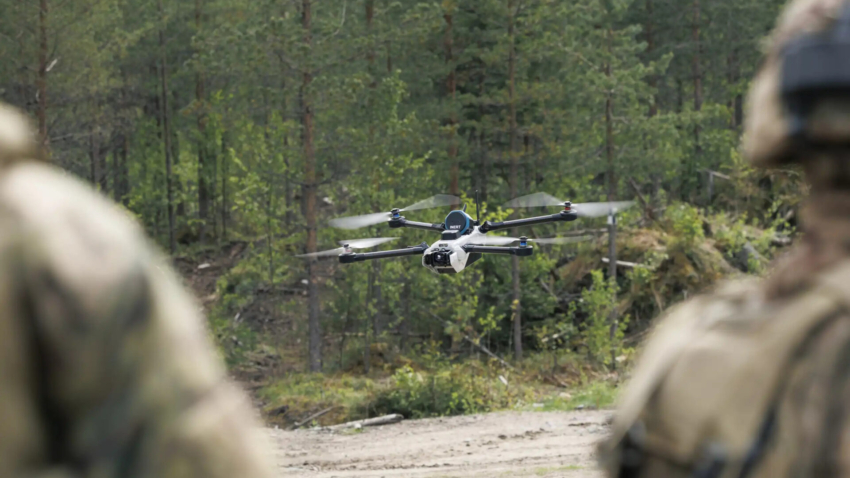
Walker was direct on where the attritable 40 percent stands today: 10,000 small drones are now in soldiers’ hands through Project AKSA, but the number falls short. “We need more because we’ve got more soldiers and everyone’s got to be able to use them.” The longer ambition is a force where no crewed ground vehicle deploys without uncrewed platforms alongside it. Defence Secretary Dan Jarvis, speaking immediately after Walker at the same conference, turned that ambition into a programme commitment: the forthcoming Defence Investment Plan will include explicit investment in uncrewed ground vehicles, the first formal signal that robotic ground platforms are leaving the experimental phase. Jarvis also disclosed that the UK has already funded 150,000 Ukrainian-made drones as part of a £752 million package.
ASGARD: 72 Hours to One
Walker also revealed that ASGARD, the Army’s agentic AI headquarters system, has vastly exceeded its original benchmarks. A corps planning cycle that once took 72 hours now takes one. Target prosecution has risen from 24 per day to 240, limited only by available munitions. The system updates on an eight to twelve week development spiral and, as demonstrated on Exercise ARCADE STRIKE run in facilities beneath central London, it now forms the digital backbone linking sensors, shooters and command posts across an entire corps.
Machine Vision, Quietly Confirmed
Away from the conference platform, the MoD made a disclosure that passed with less attention than it deserved. In a written parliamentary answer, Minister for Defence Readiness Luke Pollard confirmed that the department is actively exploring machine vision for one-way effectors, the expendable strike drones designed to fly into their targets. The development of policy is ongoing, in consultation with MoD legal teams, to ensure compliance with UK legal and ethical obligations. The practical context is Project BRAKESTOP, under which British firms including MGI Engineering, whose TigerShark is designed partly from Formula 1 aerodynamics expertise, and Rotron’s SkyLance are competing to deliver a sovereign deep-strike one-way effector capable of operating where GPS is denied. Machine vision in the terminal phase would allow the weapon to guide itself onto target even after satellite navigation is jammed or spoofed, a condition now routine across eastern Ukraine.
Challenger 3 Halted
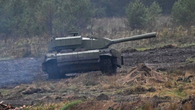
The ambition articulated at RUSI sits in uncomfortable proximity to the news emerging from the Challenger 3 programme. The turret gearbox on the £1 billion upgrade of 148 Challenger 2 hulls is not strong enough to handle the vehicle’s weight and armour as designed, according to The Telegraph. The prime contractor, Rheinmetall BAE Systems Land (RBSL), has told suppliers to halt work temporarily while a solution is found. Industry insiders cited in The National Interest put the potential delay at up to two years, pushing the in-service date from 2027 to as late as 2029. The Army had already made more than a thousand design changes from the original off-the-shelf specification, eroding the cost advantage the programme was supposed to deliver. The gearbox problem is a procurement failure in a programme that was designed precisely to avoid them.
Zero SSNs at Sea
The hardest number of the week came from Navy Lookout, whose tracking of the Astute-class fleet confirmed that not one of the Royal Navy’s nuclear-powered attack submarines is currently at sea. HMS Audacious has just emerged from dry dock after more than three years out of service. HMS Ambush last sailed in August 2022, nearly four years ago, and has been partially stripped for spares. HMS Artful has not put to sea since around May 2023. HMS Astute is in a multi-year Mid Life Re-Validation Period at Devonport. The bottleneck is infrastructure: the UK has only three nuclear-licensed dry docking facilities, and two are currently occupied. The consequences range across strategic commitments: carrier strike group protection is degraded, the Tomahawk Land Attack missile capability is offline, AUKUS credibility is strained, and submariners are completing Perisher command courses on foreign boats because there are no British hulls available to train on. Number 10 dock at Devonport is not expected back in service until 2027.
The Gap
Walker’s speech was the most substantive public statement of British military ambition in years. The ASGARD numbers are real, the doctrine is coherent, and the investment trajectory is genuine. But the conference backdrop of a grounded SSN fleet and a stalled tank programme is a precise illustration of the gap Jarvis inherited: “almost every single major programme behind schedule,” as he put it, and “an army at its smallest size in centuries.” The Defence Investment Plan, which Jarvis said he intends to publish before travelling to Ankara, will be the first test of whether the money now arriving can close that distance.
Image – British Army