Ukraine’s Flamingo Tomahawk-Beating Missile Flies On $100 Hobby Autopilot
Ukraine’s Flamingo missile runs on a $100 open source autopilot built for hobby drones. Plus: Anduril’s pilotless attack copter, a drone-frying microwave weapon, a swarm-command helmet, $218k missiles by the thousand, and a bomber downed in Crimea.
Consumer Tech Is Doing The Heavy Lifting
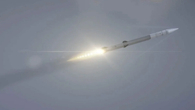
Ukraine’s FP-5 Flamingo cruise missile, which carries twice a Tomahawk’s warhead over twice the range for a fraction of the cost, flies on Ardupilot, an open source autopilot that has run hobby drones since 2009 on hardware costing under $100. Russia’s newest Shahed variants reportedly use a similar shortcut, pairing a Raspberry Pi with open source vision software to lock onto targets. The distance between a defense contractor’s lab and a hobbyist’s garage keeps shrinking, and it shows in how fast this week’s frontline hardware moved from prototype to combat.
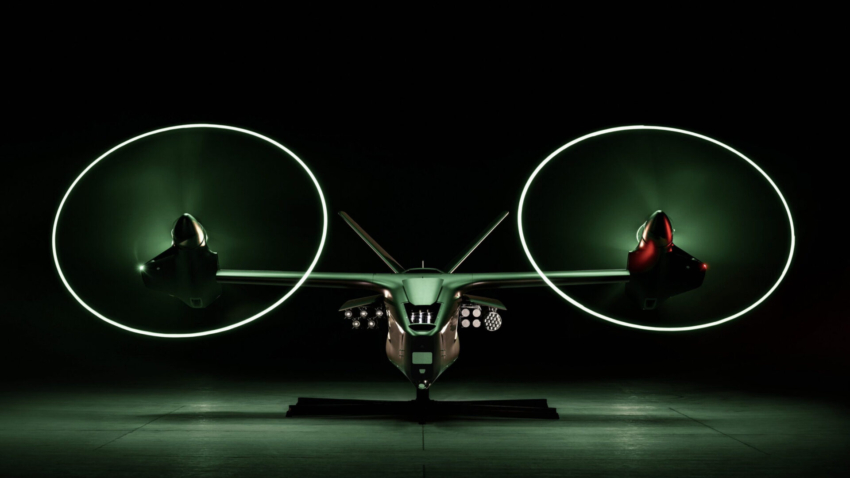
Anduril Unveils An Attack Helicopter With No Pilot
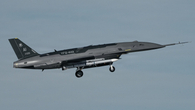
Nowhere was that pace more visible than at this week’s Farnborough Airshow, where Anduril unveiled Thunder, an autonomous attack rotorcraft built with Archer Aviation to fly alongside crewed helicopters like the Apache. Built around tilt rotors and a hybrid electric powertrain, a single Thunder can carry 10 air to ground missiles, 16 launched effects or 76 70mm rockets, controlled through Anduril’s Lattice autonomy software rather than a pilot. Anduril says the aim is to keep helicopter crews further from a battlefield increasingly saturated with loitering munitions and cheap air defenses. First flight is targeted for 2027.
A Reusable Weapon Against Drone Swarms
Lockheed Martin used the same show to unveil the answer to the threat Thunder is designed around. The Morfius X-Rotor is a ground launched, recoverable high power microwave weapon the company says can disable more than 50 drones in a single flight without relying on a dedicated sensor or fire control radar. It has already flown test missions in Arizona, California and Oklahoma, part of a wider push to cut the cost of shooting down cheap drones after US interceptor stockpiles were strained fighting Iranian missiles and Shaheds.
Pilots Become One Person Command Centers
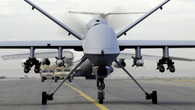
Farnborough’s third big reveal addressed who controls all this hardware. BAE Systems showed off Project Intuity, a helmet mounted display meant to let fighter pilots command fleets of drones without looking down at cockpit instruments. The visor has twice the display area of current systems, combining head tracking and 3D audio cueing to filter incoming data. It follows Navy trials where F-35 pilots used tablets to control uncrewed drones, and comes weeks after the Air Force’s first live fire test of its Anduril built YFQ-44A wingman drone.
The Pentagon Buys Missiles By The Thousand
The economics driving all of it were on display in Washington too. The Pentagon signed framework deals with Anduril, CoAspire and Zone 5 Technologies to build cruise missiles for about $218,000 each, a sixth of the cost of the Joint Air to Surface Standoff Missile they are meant to supplement. The Air Force wants up to 8,000 rounds a year across all three vendors, with budget plans calling for 28,000 missiles over five years for $12.6 billion.
The Doctrine Already Works In Combat
Ukraine keeps proving the underlying bet correct. Special forces from the National Guard’s Omega unit destroyed a Russian Su-24M bomber at Saky airbase in Crimea, hitting the aircraft’s nose section with one drone and its fuel tanks with a second as it prepared for a combat sortie. Commander Oleksandr Pivnenko said units are now routinely striking logistics routes, ammunition depots and air defenses more than 100 kilometers behind Russian lines.
Image – ‘Thunder’ – Anduril