
Pentagon to Create a Four-Star Drone Command
The Pentagon wants a four-star drone command by October 2027, and Congress holds the keys. Elsewhere: Russia meshes its drones, robots take prisoners, interceptors top Ukraine’s orders, a White House drone port and Rio Grande boats.
A Command For Robots
Drones are getting their own four-star command. Speaking at Quantico on 30 September, Defense Secretary Pete Hegseth announced Autonomous Warfare Command, or AUTOWARCOM. It will have “service-like authorities built to scale autonomous and robotic capabilities across the joint force in the fastest peacetime shift in modern military history,” Breaking Defense reports. Hegseth said the model came from Ukraine. “Ukraine’s lesson is not that one type of drone wins wars, but rather the need for a purpose-built system that maximizes the ability to adapt.”
US Future Warfare Study
The command will not appear overnight. A Pentagon memo sets a target of October 2027. Giving a combatant command its own acquisition authority, as Special Operations and Cyber commands have, requires legislation. The Senate’s draft fiscal 2027 defence bill already calls for a Robotic and Autonomous Systems Combatant Command. In the meantime, the Pentagon’s autonomy portfolio office becomes Project Agincourt, led by Defense Innovation Unit director Owen West. A separate study of future warfare, Project Meridian, is co-led by Elon Musk, Palmer Luckey and Newt Gingrich and is due to report in January 2027. The same speech doubled planned cuts to general and flag officer posts to 20%, a move senators from both parties have questioned.
Russia Meshes Its Drones
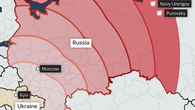
Russia is linking its long-range attack drones together in flight. Ukrainian Air Force spokesperson Yurii Ihnat says Geran-5s and Shaheds now use mesh networks in which drones “talk to each other and hand the control signal back toward the operator, so no single link has to carry it alone,” Euromaidan Press reports. One drone can act as scout, striker or relay for the rest. Russia is also fitting higher-resolution cameras.
Robots That Take Prisoners
Ukraine is sending robots deeper. NC13, a strike unit in Ukraine’s 3rd Army Corps, uses heavy drones to carry unmanned ground vehicles (UGVs) 15-20 kilometres behind Russian lines. The drones release them there to hit logistics and dugouts, writes Kateryna Lisunova in the Kyiv Independent. Some Russian soldiers have surrendered to the robots, which escort them back under guard. The tactic, called Gryphon, was first used in January and has now passed 100 successful operations. NC13’s commander says ground robots carried out 80% of logistics and 90% of casualty evacuations during stages of Operation Vivaldi.
Interceptors Top The Order Book
Ukrainian units ordered more than 590,000 drones through the Brave1 Market between January and September, according to Ukraine’s Ministry of Defence, MiGFlug reports. The most ordered category is no longer the FPV (first-person view) kamikaze drone. It is the interceptor, built to shoot down reconnaissance drones and Shaheds. Orders for fixed-wing kamikaze drones peaked at six times the January level. Units pay with e-Points earned in combat.
Drones Over Washington
President Trump wants a drone port on the roof of the new White House ballroom. The Secret Service already runs one a few hundred feet away, AP reports via ABC News. Four weatherproof boxes on a Treasury building hold small, unarmed Skydio surveillance drones that launch on command. It is the “drone as first responder” model used by hundreds of US police forces. The programme speeded up after the 2024 Butler shooting, when the agency neither countered the shooter’s scouting drone nor flew one of its own. “If a drone was so close to the White House that it needed interdiction, it’s already gotten too far,” says Matt Sloane of SkyfireAI.
Boats On The Rio Grande
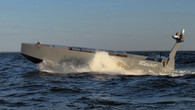
Seasats, whose autonomous boat filmed a Chinese destroyer off Luzon in June, now patrols US waterways. The Pentagon wants to grow its border fleet of 11-foot Lightfish uncrewed surface vessels from 10 to as many as 50, The Independent reports. Each costs about $240,000, launches from a boat ramp or a pickup truck and can stay out for months. Pentagon figures credit the boats with 452 detections in a typical month.
Featured Image – Alex Wong/Pool Getty Images North America via AP, Creator: Alex Wong