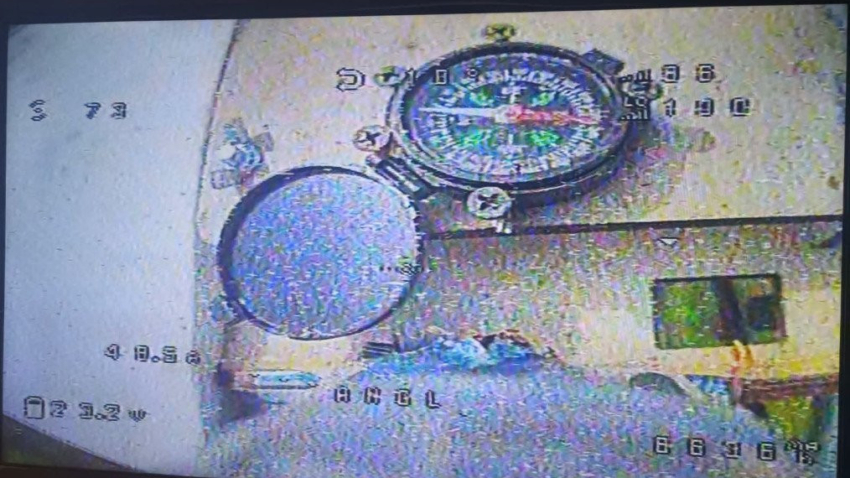
Russia’s Compass-And-Screws Fix For GPS-Jammed Drones
Russia is bolting compasses onto jammed drones and merging two drone types onto one network to dodge jamming. Also: a $50M Buk-M3 destroyed by one drone, a Tu-95 bomber hit from 800km, Navy robots reporting from the seabed, and a new Sikorsky VTOL.
A Compass And Five Screws
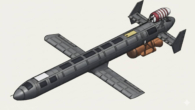
Russia has started fitting its low cost Molniya attack drones with an onboard magnetic compass, a decades old navigation tool now serving as backup guidance when GPS and GLONASS signals are jammed. A downward facing camera periodically reads the compass to hold heading through interference. Presidential defense technology adviser Serhii Beskrestnov says Russia can build 10 to 15 Molniyas for the price of one $100,000 Supercam reconnaissance drone, evidence the country is choosing cheap fixes over new platforms.
Russia Merges Its Drone Networks
The same improvisation is showing up in how Russia links its drones together. For the first time, Russia has controlled Molniya drones through Gerbera relay drones over a shared mesh network, a licensing restriction that had kept the two systems apart until now. Both use radio modems from the same Chinese manufacturer on the same frequency band, letting operators inside Russia steer strikes from hundreds of kilometers away even as individual nodes are shot down. Beskrestnov’s fix is blunt: destroy the Gerbera relay and the Molniyas it is guiding lose their link.
One Drone Erases $50 Million
Ukraine keeps showing what that link costs to defend. Ukraine’s Phoenix border guard unit destroyed a Russian Buk-M3 air defense launcher, worth an estimated $40 to $50 million, with a single drone costing a few thousand dollars while the system moved toward the front in Donetsk. The Buk-M3 can engage targets up to 70 kilometers away and carries six missiles in sealed launch canisters, but its crew appears not to have expected an aerial attack while in transit.
A Cold War Bomber Ukraine Cannot Replace
Ukraine’s Security Service went after a rarer target the same week. Satellite imagery from AviVector and Planet Labs has confirmed a Ukrainian drone strike destroyed a Tu-95MS strategic bomber at Russia’s Engels-2 airbase from 800 kilometers away. Only around 60 Tu-95s remain in Russian service, the aircraft that carries the Kh-101 cruise missiles used against Ukrainian cities, and production of new ones ended decades ago. Russia’s planned replacement, the PAK DA stealth bomber, still exists only on paper.
The Navy Tests Talking To Its Robots Underwater
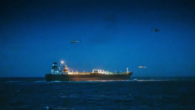
Away from the front line, the US Navy is solving a quieter problem: how to manage uncrewed vehicles it cannot see or hear from shore. During Exercise Lanternfish, Bedrock Ocean, Integer Technologies and Liquid Robotics linked autonomous underwater vehicles to a Wave Glider surface relay and shore based operators over low bandwidth satellite links, using digital twin software to compress vehicle status into brief updates instead of continuous data streams. The setup let operators track submerged vehicles without a crewed support ship nearby, aimed at protecting undersea cables and pipelines.
A New Drone Learns To Fly Two Ways
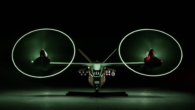
Sikorsky, meanwhile, is building the platform meant to carry crews and robots together. The company has completed initial flight testing of its Nomad 100, a rotor blown wing drone that takes off vertically like a helicopter before tilting level to fly like a fixed wing aircraft, under a DARPA program called EVADE. Sikorsky says the design, built to operate from ship decks and unimproved landing zones, will handle reconnaissance, light attack and contested logistics as part of crewed uncrewed teams. From a compass bolted to a Shahed to a Navy robot reporting in from the seabed, this week’s stories share the same shape: militaries improvising cheaply where they can and investing heavily where they must.
Image – Serhii “Flash” Beskrestnov/Telegram