Loyal Wingman, CCA, or Both? Inside The Global Race to Build Autonomous Squadronmates
The US, UK, Australia, China, Japan, India and a post-FCAS Europe are all building autonomous aircraft to fly alongside crewed ones. The terms get used almost interchangeably, but they’re not quite the same thing, and neither is the level of autonomy on offer.
Two names, one idea, one real difference
“Loyal wingman” is the older and broader term. It traces back to the “Third Offset” strategy of the mid-2010s, when defence planners first proposed pairing an unmanned aircraft with fourth- and fifth-generation fighters to boost their performance. It doesn’t specify a platform type, fixed-wing or rotary, and it remains the term most commonly used for the general concept of a crewed aircraft acting as command asset while an uncrewed one extends its reach or absorbs its risk.
“Collaborative Combat Aircraft,” or CCA, is narrower. It’s the US Air Force’s own official designation for what’s popularly known as the loyal wingman, intended to accompany crewed fighters with similar flight characteristics and carry out orders assigned by pilots. Where the original loyal wingman concept proved an uncrewed aircraft could safely fly alongside a crewed fighter under close supervision, CCA is meant to go further: making tactical decisions within predefined parameters and coordinating with multiple assets at once. Airbus, pitching its own design, describes a CCA in almost identical terms to loyal wingman, which is part of why the two labels get used so loosely in coverage. In practice, CCA has come to mean the fixed-wing, jet-powered fighter drones; the rotary programmes further down this piece are consistently described in official material as loyal wingmen, never as CCAs.
America’s head start
The US Air Force wants roughly 1,000 autonomous combat drones, pairing them with the F-35, F-47, and potentially the B-21. General Atomics and Anduril won the first production contracts in June 2026, signing deals for more than 150 CCAs at a target unit cost of $30 million, above the sub-$2 million figure once floated for the category. Three companies, Anduril, Shield AI and RTX’s Collins Aerospace, won initial mission-autonomy contracts from a pool of six vendors, with a primary provider due to be picked by 2027. Anduril’s YFQ-44A carried out the first ever live-fire strike from a CCA in April, with weapon release staying under human control.
Britain names its fleet
At Farnborough July 2026, the UK put a name and a budget to its own CCA effort: Storm Fighter, backed by a £300 million commitment through the government’s Defence Investment Plan. BAE Systems has since unveiled its own entry for the requirement, Brontanax, a prototype built at Warton and sized close to BAE’s Hawk trainer, self-funded rather than contracted, with other manufacturers still expected to compete. Separately, StormShroud, the RAF’s first autonomous collaborative platform, entered service in May 2025, and the UK is working with Japan under the Global Combat Air Programme toward a sixth-generation fighter with autonomy built in.
The Indo-Pacific build-up
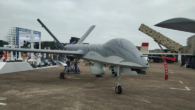
Australia is furthest along outside the US. Ghost Bat, officially the MQ-28, is built by Boeing Australia in partnership with the Royal Australian Air Force under the Airpower Teaming System programme, and the country expects its first three Block 2 aircraft by the end of 2026, growing to ten by 2030. Japan has run joint research with the US Department of Defense and Boeing since 2023, China showcased four uncrewed designs at a September 2025 military parade, and India is pushing its own human-machine teaming programme.
Europe pivots after FCAS
Germany and France cancelled the crewed Next Generation Fighter component of the €100 billion Future Combat Air System in June 2026, after Dassault and Airbus failed to resolve a workshare dispute. The programme’s Combat Cloud network and Remote Carrier drone elements are being preserved under a revised Franco-German framework; Spain’s role in that framework hasn’t been confirmed. Germany separately wants up to 400 fighter-bomber drones by 2029, and Boeing and Rheinmetall have formed “Team Ghost Bat Germany” to compete for it. Outside FCAS, Airbus and Saab are negotiating a separate loyal wingman drone for Typhoon and Gripen, and Boeing, Airbus and Helsing all showed rival designs at the Berlin Airshow, targeting service entry from 2029.
Loyal wingman takes to rotary
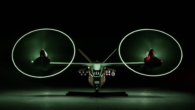
The concept isn’t limited to fast jets. The British Army’s Project NYX is developing autonomous wingman drones for its AH-64E Apache fleet, with Anduril UK, BAE Systems, Tekever and Thales sharing £10 million in concept-demonstrator funding. The drones are intended to handle reconnaissance, precision strike and electronic warfare, operating autonomously so Apache crews get the data without flying the aircraft directly, with weapons release remaining a human decision. Two finalists are due for prototype work in autumn 2026, targeting service by 2030. Anduril’s own rotary design goes further still: Thunder, an autonomous attack rotorcraft unveiled at Farnborough, built to pair with crewed attack helicopters generally rather than any single type.
Where they converge, and where they don’t
The similarities outweigh the differences. Both concepts extend a crewed platform’s sensor reach, add mass at lower cost than another crewed airframe, and keep weapon release as a human decision in every published programme so far. The differences are mostly a matter of maturity. Fixed-wing CCA has already reached a live-fire test and production contracts, seven years after the concept was first floated under the “Third Offset” strategy. The rotary loyal wingman effort is still earlier in that same arc: Project NYX only reached its concept-demonstrator shortlist in January 2026, with prototype selection due this autumn and a fielding target of 2030.
The human factors question
Building the airframe has turned out to be the more tractable problem either way. In June 2026, the US Air Force activated an Experimental Operations Unit at Nellis Air Force Base to test how pilots and CCAs work together, refining how much a single pilot can realistically supervise before workload becomes the limiting factor. That sits on top of an unresolved question about autonomy itself: manned-unmanned teaming concepts describe a range of control levels, from a human directing every action to a drone completing a mission independently if contact is lost, and no air force, fixed-wing or rotary, has settled publicly on where its aircraft should sit on that scale.
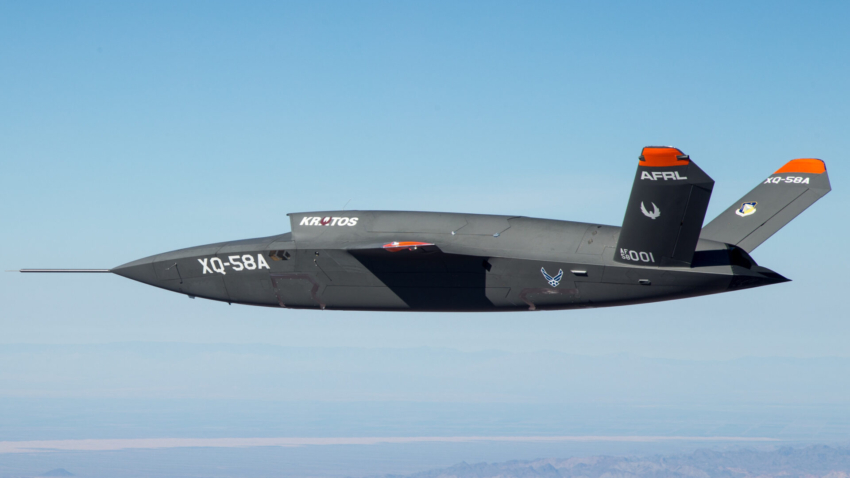
Image – The uncrewed XQ-58A Valkyrie demonstrator on its inaugural flight, Wikipedia