China’s 40,000-Ton Amphibious Ship May Double As A Drone Carrier
China’s 40,000-ton Type 076 enters trials as a carrier for its GJ-21 stealth drone. Plus: Japan’s $55.6bn drone budget, the Army’s drone-only soldiers, a Bradley carrying robot swarms, Germany’s cargo robots for Ukraine, and a backpack drone killer.
China’s Amphibious Ship Doubles As A Drone Carrier
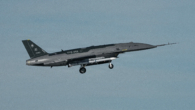
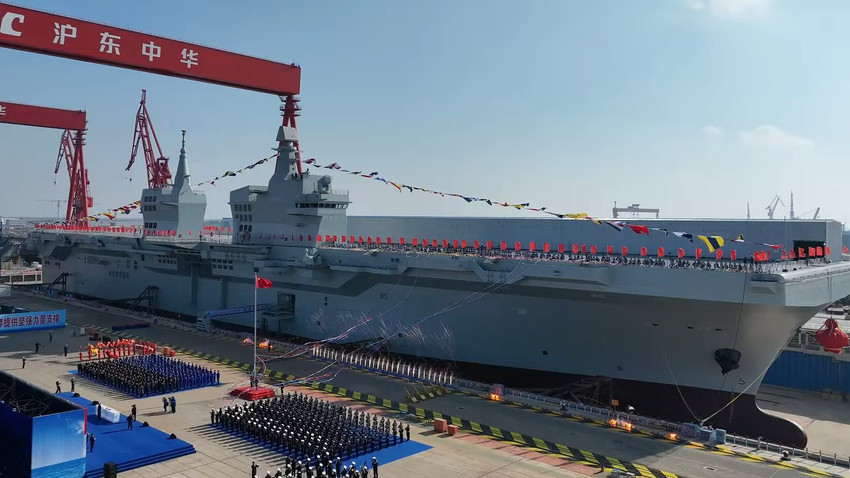
China’s Type 076 amphibious assault ship Sichuan, displacing more than 40,000 tonnes fully loaded, has entered final sea trials ahead of an expected handover to the navy by the end of the year. Unlike most amphibious ships, which fly aircraft that take off vertically or over short distances, the Sichuan carries an electromagnetic catapult similar to the one on US Ford class carriers, letting it launch fixed wing aircraft including the GJ-21, a naval stealth attack drone that has only been spotted publicly a handful of times since its debut at China’s 2025 Victory Day parade. State broadcaster CCTV has already shown computer generated footage of the drone launching from the ship’s deck.
Japan Answers With Drones, AI And A Bigger Budget
Japan’s response to that kind of buildup is arriving through its own budget request. The Defense Ministry has disclosed an 8.9 trillion yen, or $55.6 billion, request for the coming fiscal year built around drones, artificial intelligence and new methods of warfare, part of a five year strategy that has already doubled defense spending to about 2% of GDP. Officials say the plan draws directly on Ukraine’s use of drones, funding low cost uncrewed weapons launched from above and under water alongside an “AI orchestrator” meant to integrate multiple AI systems for faster battlefield decision making, with a finalized figure expected once a new security strategy is approved in December.
The US Army Graduates Its First Drone Only Soldiers
Washington’s own adjustment is showing up in who it trains rather than what it buys. More than 250 soldiers have already graduated from the Army’s new 15X tactical unmanned aircraft system specialty at Fort Huachuca, Arizona, with roughly 770 expected to finish training by the end of the year. Unlike previous drone roles split by aircraft size, 15X soldiers train across small FPV systems and large, long range drones alike, learning to fly, fix and adapt to new hardware like fiber optic controlled drones within weeks of it appearing in open source reporting from Ukraine, according to 1st Aviation Brigade commander Colonel Michael Gourgues.
A Bradley Learns To Carry Its Own Robot Swarm
The Army is also testing how those drones reach the battlefield in the first place. During the Pegasus Charge 3 exercise, engineers mounted five FireAnt ground robots from Swarmbotics AI vertically along the side of an M2A4 Bradley, using the armored vehicle to ferry a small swarm directly into position rather than deploying each robot separately. It is not yet clear whether the Bradley is meant only to transport the robots for soldiers to unload by hand, or eventually release them autonomously, and mounting five systems together in the open raises an obvious vulnerability to a single FPV strike or blast fragment.
Germany Funds Ukraine’s Logistics Robots
Ukraine, meanwhile, is scaling up the robot doing that unloading for real. Germany has funded a 100 unit contract for Ukrainian Armor’s Protector, a diesel powered ground robot roughly the size of a Humvee that can carry 1,480 kilograms of ammunition, food or fuel and tow a further 4 tonnes, with the first ten vehicles already delivered to Ukraine’s National Guard. Soldiers using earlier versions have reported hauling close to a metric ton of supplies in a single run, and while some units have lost Protectors to mines, others have survived FPV strikes mid mission and still completed their delivery.
A Backpack That Shoots Down Drones
Elsewhere the fight against small drones is shrinking to fit on a soldier’s back. San Francisco startup Mara has raised $7 million for Spike, a counter drone system pairing a sensor unit called Spotter with small, 250 gram, 200 kilometer per hour tube launched interceptors called Seeker, deployable from a single rucksack up to a multi kilometer perimeter shield with a launcher holding up to 48 rounds. Spotter has already tracked FPV drones near Ukraine’s front line, and Seeker has completed intercepts cued through US Army systems during a Texas exercise, with Mara now in early discussions with military partners in Britain, the Czech Republic and Ukraine.
A Boat That Learns To Fly Over Water
Sweden’s contribution this month came from the water rather than the battlefield. Composites manufacturer Aston Harald completed the first test flight of GhostFoiler, an uncrewed hydrofoil vessel that lifts entirely clear of the water on underwater wings and must balance itself in real time without a rider, a materially harder control problem than keeping an ordinary hull afloat. Built on research tracing back to a 2008 KTH student project, the craft is headed to Portugal to join Team Sweden at NATO’s REPMUS exercise, where early stage uncrewed maritime technology gets tested alongside systems from established defense contractors.
Featured Image – Launch Ceremony of China’s Type 076 amphibious assault ship Sichuan/Wikipedia