From Canberra To The Caribbean, The Autonomy Build-Out Goes Global
Australia unveiled a ten year defence strategy while a Saildrone caught an $81M cocaine haul across the world. Plus: France’s carmakers build drones, Rolls-Royce engines a German wingman, two Israeli firms scale up, a robot boat runs errands in Hawaii.
Canberra Sets Its Ten Year Bet
Australia has launched a new Defence Innovation, Science and Technology Strategy setting six priorities for the next decade: long range fires, high energy lasers, autonomous systems, quantum, artificial intelligence and undersea warfare. Deputy Prime Minister Richard Marles tied the plan directly to programmes already underway, the Ghost Bat uncrewed aircraft and Ghost Shark autonomous submarine, and to lessons drawn from Ukraine and the Middle East, including quantum navigation systems meant to keep working when GPS does not.
A Handheld Reader For The Radio Spectrum
One of the products that strategy is meant to accelerate is already in soldiers’ hands. Australian company DroneShield has released RfRecon, a handheld device combining signal detection, direction finding and onboard AI processing to help troops interpret a crowded electromagnetic battlefield rather than just collect raw data. The new version delivers six times the radio frequency coverage and four times the processing power of its predecessor, and can feed directly into layered counter drone systems that combine cyber and kinetic defeat options.
France Turns Its Car Factories Into Drone Lines
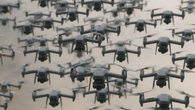
France is chasing the same acceleration through its automotive industry. At least six defense automotive partnerships have launched since January, with Valeo building electric drone motors, Renault and Thales industrialising the Toutatis kamikaze drone toward 1,000 units a month by 2027, and Delair and Schaeffler targeting around 100 drones a day by November. Combined, the announced projects could reach 60,000 drones a year, still far short of Ukraine’s output but a real shift from France’s current stockpile, which its own Senate defense committee called insufficient to reach critical mass.
Rolls-Royce Builds Germany’s Wingman Engine
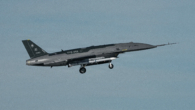
Britain’s industrial base is filling a gap of its own making, for an ally. Rolls-Royce confirmed it is developing a new 20 to 30 kilonewton engine family for Germany’s planned loyal wingman drone fighter, work that also signals Berlin has paused its option to buy Boeing’s MQ-28 Ghost Bat outright. The engine could power either Helsing and Grob’s CA-1 Europa design or a future German entrant, and sits alongside Rolls-Royce’s existing work on the Tempest sixth generation fighter engine, now effectively positioning the company as engine supplier to two allied drone fighter programmes at once.
A Quiet Drone Maker Scales Up
Israeli manufacturer Aero Sentinel is ramping up serial production of tactical drones built around an unusually low acoustic signature, buying components and cameras well ahead of need to shorten delivery times for a customer base that now spans Europe and Asia through an exclusive Kazakhstan distribution deal. The company is also adding visual navigation that lets its aircraft find their position from onboard cameras rather than GPS, and plans to unveil a more open architecture version at Tel Aviv’s UVID Dronetech conference in November.
Confirming What A Drone Sees
A second Israeli company is solving a related problem, not finding a target but confirming one. Tel Aviv based Sodyo has introduced RangeMark, a machine vision system that reads passive, battery free markers from up to a kilometer away using only a standard camera, no GPS, radio link or network required. Rather than inferring identity the way conventional AI vision does, the system decodes a marker into a deterministic match, and Sodyo says a single camera pass can scan roughly 20 hectares while searching for one.
A Robot Boat Runs A Supply Errand
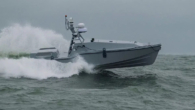
Autonomy is also handling the unglamorous logistics behind the fighting. At the RIMPAC exercise in Hawaii, a 42 foot Kaikoa vessel built by Rhode Island startup Havoc carried a 3D printed spare part nearly 40 nautical miles to the Royal Canadian Navy oiler MV Asterix and drove itself home, uncontested the entire way. Havoc has now built more than 100 autonomous boats since 2024, priced closer to a missile than a warship, and is one of seven companies the US Navy has advanced into at sea testing for a new class of medium uncrewed vessels.
Drone Boats Catch An $81 Million Shipment
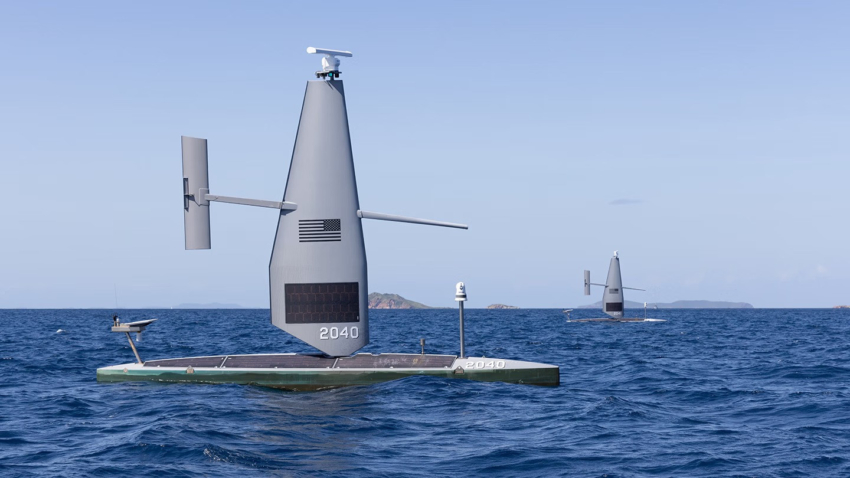
The same category of vessel is already earning its keep outside a war zone. Two Saildrone Voyager uncrewed surface vessels tracked a suspect boat in the Caribbean, feeding position data that let a US Navy ship intercept it and seize a cocaine shipment worth more than $81 million. Saildrone has kept Voyagers continuously deployed with the Navy’s Fourth Fleet for nearly three years under a $16.3 million contract, evidence that uncrewed patrol boats have moved past demonstration and into routine daily use, whether the mission is deterrence or drug interdiction.
Image – Saildrone Voyager USVs sailing in the Caribbean. Image/Saildrone