China Learns The Drone War Without Fighting It
Chinese analysts write up new Ukrainian and Russian drone tactics within four months, and PLA units train against them. And: Musk’s Starlink throttle, rocket-armed drones, Pentagon orders, underground factories and a robot 4×4.
China’s Drone War Classroom
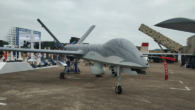
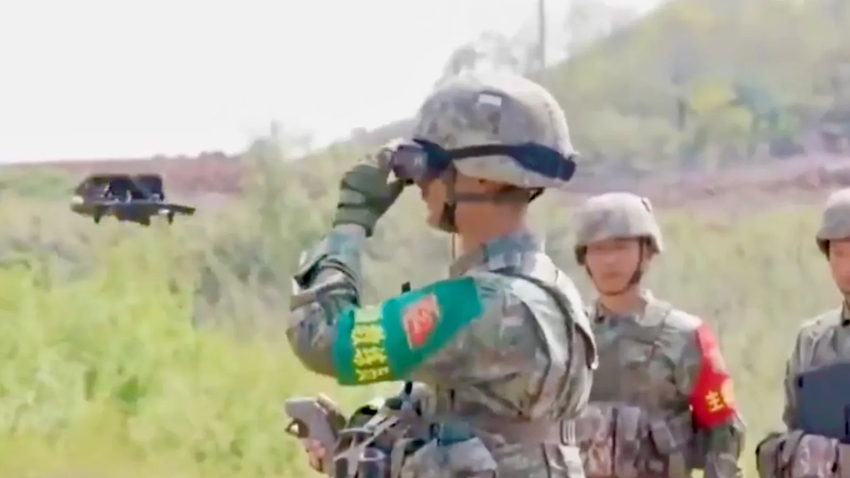
China is running the most systematic outside effort to learn from the Ukraine drone war, argue Lilly Min-Chen Lee and Kateryna Bondar of the Center for Strategic and International Studies (CSIS). Drawing on more than 90 Chinese-language sources from 45 outlets, they find that Chinese analysts write up new battlefield techniques within about four months, though turning them into hardware, training and force structure takes a year or more. The People’s Liberation Army (PLA) Daily flagged Russia’s fibre-optic first-person-view (FPV) drone within weeks of its debut, and Chinese units were training with FPVs about a year later. Much of the deepest work comes from China’s air and harbour defence designers, who treat Ukraine’s sea drones and airfield raids as previews of attacks on China. Four and a half months after Operation Spider’s Web, a PLA brigade rehearsed defending against a team of more than 20 drone operators.
The Throttle Explained
Ukraine’s Starlink and Starshield links are back to their previous speeds, President Volodymyr Zelenskyy said on 24 October, after restrictions that disrupted front-line operations for more than a week. Restoration began overnight, he said, improving logistics and defence against jet-powered Shaheds. Elon Musk then said SpaceX had throttled Starlink, a civilian commercial service, because Ukraine’s military had used it for offensive drone strikes in breach of its terms of service. He maintained that the US government controls any changes to Starshield, the military-grade version that underpins Ukraine’s drone operations. Accounts in Washington differ. President Trump said he did not make the call, Vice President JD Vance hinted at coordination, and Secretary of State Marco Rubio and Defense Secretary Pete Hegseth denied any administration involvement. Ukrainian commanders had reported lost drones and disrupted missions.
Rockets From A Multirotor
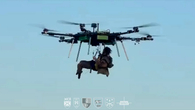
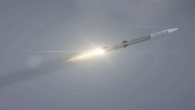
A modified Malloy Aeronautics T-150 heavy-lift drone has shot down multiple one-way attack drones with laser-guided rockets, BAE Systems says. The trials ran from 21 to 25 September at Eglin Air Force Base in Florida, during a Pentagon experimentation exercise, and the drone engaged several targets in succession without landing or reloading. It carries a production-ready three-pod launcher for APKWS, a BAE kit that turns the 70mm Hydra rocket into a precision weapon. US Navy and Air Force fighters used APKWS against Houthi drones over the Red Sea at well below the cost of an air-to-air missile. The T-150 is built in Maidenhead, and the US version, TRV-150, was adapted by SURVICE Engineering. BAE now wants to take it to sea. The released imagery comes from an earlier trial.
Waiting For The Orders
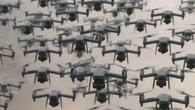
The Pentagon wants a domestic drone industry, but manufacturers are divided over whether the demand will last. Its Drone Dominance programme runs gauntlet-style competitions worth $1 billion over two years. Gauntlet 1 picked 11 companies to deliver 30,000 small drones, with orders ranging from 1,520 for Farage Precision to 4,960 for Neros. Gauntlet 2 covers 30,000 drones in each of two categories. None of it guarantees follow-on work, and the Army’s Jon Strzelec admits the department is trying to “artificially induce” demand. Performance Drone Works chief executive James Slider says 1,000 drones a month for a year would be healthy. Much depends on nearly $55 billion for autonomous warfare in the 2027 budget request, most of it sought through a reconciliation package still stalled in Congress.
Factories Go Underground
Croatian drone maker ORQA, which supplies 24 NATO allies, is building an underground component factory in Ukraine with Ukrainian drone maker General Cherry. The partners will co-produce interceptor drones and counter-drone systems for NATO in Croatia, while the Ukrainian plant makes electronics and communications components, which General Cherry says it will also supply to other Ukrainian firms. ORQA chief executive Srđan Kovačević told Business Insider that Ukraine’s dispersed, underground production has no single point of failure, a lesson Western companies tend to neglect. Latvian defence minister Raivis Melnis says NATO firms work in a far more concentrated way. The cost is efficiency, and Ark Robotics’ chief executive called dispersal necessary but not ideal. One of ORQA’s aims is to cut reliance on Chinese parts.
A Robot 4×4 For Every Job
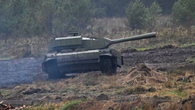
The US Army is trying Overland AI’s ULTRA uncrewed ground vehicle in a widening set of roles. During a month-long rotation at Fort Polk, four ULTRAs supported the 82nd Airborne Division’s 3rd Brigade Combat Team, and Overland says autonomous resupply cut distribution times by about 50%. One mission was an 8-kilometre run to a sniper team, with a second vehicle acting as a decoy. At African Lion 2026 in Morocco, one ULTRA carried a remote weapon station for covering fire while another breached wire obstacles. At the AUSA show, it appeared with a Leonardo DRS radar for spotting drones. ULTRA carries 1,000 pounds, reaches 35 mph and navigates off-road without GPS. These are manufacturer-reported exercise results, not Army-wide adoption.
Featured Image – TWZ