EU Expects Russia To Fire 20 Million Drones In 2027
The EU expects Russia to use 20 million drones against Ukraine next year, double this year’s estimate. Plus: drones lead Sudan’s civilian deaths, a Leopard survives 45 hits, Bronk on fighters, Orca nears service and a 70-knot seaglider.
Twenty Million Drones
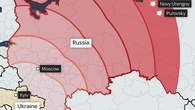
Russia is expected to use around 20 million drones against Ukraine in 2027, double the roughly 10 million Ukraine predicts for this year, European Defence Commissioner Andrius Kubilius said on 18 November. Drones are set to make up 62% of Ukraine’s defence procurement needs by value in 2027, up from 31% at the start of 2026. The Commission proposed a €45 billion top-up for Ukraine, including €25 billion for defence next year, and has begun preparing €14.4 billion of 2027 procurement for drones and ammunition. Ukrainian Defence Minister Yevhen Khmara plans to double drone supplies and more than triple long-range strike capability next year. Germany pledged to buy jointly produced middle- and deep-strike drones, Norway set aside $300 million for Ukrainian drones, and Britain is sending more than 1,000 long-range strike drones worth about £260 million. Pentagon policy chief Elbridge Colby told allies that deep strikes had not helped end the war, a view German Defence Minister Boris Pistorius rejected.
Sudan’s Drone War
Drones are now the leading killer of civilians in Sudan’s civil war, according to the Institute for Economics and Peace, drawing on UN data. Drone strikes killed at least 880 civilians between January and April 2026, more than 80% of conflict-related civilian deaths, and at least 306 in the first three weeks of October. The deadliest, on 18 October in Dibab, West Kordofan, killed at least 139 people when a repeat strike hit a transport truck. Markets were the most frequently struck target, and the UN attributes civilian deaths to both the Sudanese Armed Forces and the Rapid Support Forces. The Centre for Information Resilience has identified 21 drone models used since 2023, mainly from Belarus, China, Iran, Russia, Sudan and Türkiye. The institute’s Global Peace Index says recorded drone attacks worldwide rose by about 11,500% between 2018 and 2025, and that no binding international framework governs targeted drone strikes.
The Tank That Took 45 Hits
A Ukrainian Leopard tank stayed operational after 45 first-person-view (FPV) drone strikes during Operation Vivaldi near Lyman, according to military analyst Rob Lee, citing a brigade commander involved. Lee, a senior fellow at the Foreign Policy Research Institute, said the commander still values tanks and expects successful armoured assaults in future. Ukrainian analyst Dmytro Putyata described a similar case on the other side, in which Ukrainian forces used 52 FPVs over a couple of hours against a Russian T-62M that did not burn because it carried no ammunition. In February, a Leopard 1A5 of the 5th Separate Heavy Mechanised Brigade, fitted with reinforced anti-drone protection, survived 52 drone strikes and was recovered by its crew. Survivability depends on the warhead, where the drone hits and the vehicle’s protection. These are individual accounts, not systematic data.
Fighters Still Fly
Drones can wear an enemy down but cannot win a war, Justin Bronk of the Royal United Services Institute (RUSI) told Zurich daily Tages-Anzeiger. Ukraine is a misleading model, he argues, because both sides have strong air defences but no Western-style air forces, and drones have frozen the front only where minefields, obstacles and anti-tank weapons were already doing so. Nor can drones take over air policing, which needs a human who can read another pilot’s behaviour. His strongest evidence is China, which runs half a dozen uncrewed combat aircraft programmes but mass-produces none of them, while building about 120 J-20s and 100 J-16s a year. He doubts sixth-generation fighters will fly with swarms of loyal wingmen, because useful escorts will be too expensive to buy in thousands. For Switzerland, he suggested the Gripen E would be considerably cheaper over its life than the F-35.
Orca Nears The Fleet
The US Navy is moving its large uncrewed underwater vehicles (UUVs) towards operational employment, said Rear Admiral Chris Cavanaugh, commander of Submarine Forces for the Pacific Fleet. Boeing’s Orca extra-large UUV, a programme launched in 2017 to lay undersea mines, has a range of up to 6,500 nautical miles. Two of three prototypes have been delivered, and the third is due soon, said programme manager Captain Michael Linn, who plans to put it through its paces to find what it does well and badly. Lessons will feed the Combat Autonomous Maritime Platform (CAMP), a Navy and Defense Innovation Unit effort to prototype and field extra-large UUVs quickly, while the Dragonfish large-displacement UUV has replaced the cancelled Snakehead. Cavanaugh said the systems let the Navy accept risks it would not take with crewed submarines. No dates for operational use were given.
A 70-Knot Seaglider
Rhode Island start-up REGENT has signed its first production contract for Squire, a drone that floats like a boat and flies just above the water at 70 knots. The US government customer, the number of drones and the value are undisclosed, but chief executive Billy Thalheimer says a small fleet will deploy in the Middle East next year for multi-domain perception, placing sensors in the water at one site and then flying on to the next. Squire is about 4 metres long with a 5.5-metre wingspan, weighs just under 181 kilograms and carries a 23-kilogram payload. Hydrofoils lift it out of the waves so it can take off in chop and wind without launch gear. It runs REGENT’s own autonomy software and has been linked with TAK and Anduril’s Lattice. REGENT raised $240 million in August, and its new factory can build up to 300 Squires a year.
Featured Image – European Defence Commissioner Andrius Kubilius – Wikipedia