Sea Drone Rescues Downed US Crew in Historic First
A robot boat rescues two downed aviators in the Gulf, and the way it happened says a lot about where naval autonomy is heading. Plus: Taiwan’s drone budget gutted, what survived the FCAS wreck, bee-brained drones, and an AI boss breaks ranks.
First Combat Rescue by Robot Boat
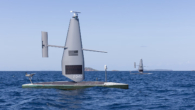
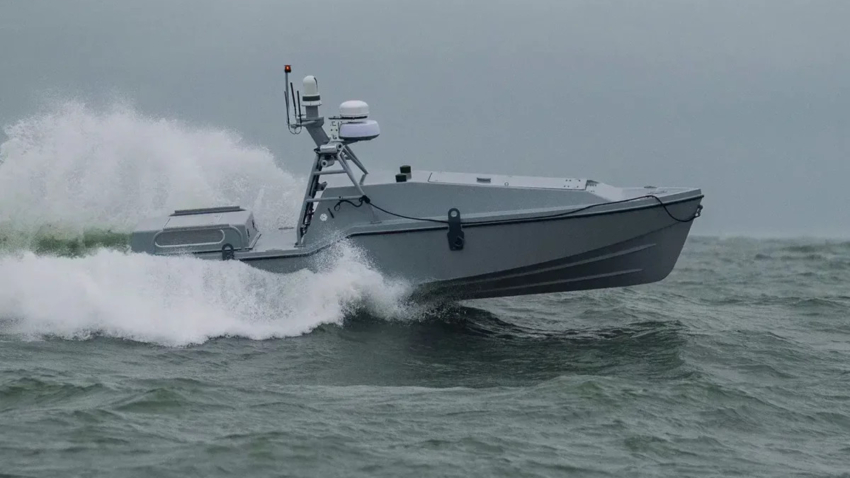
Two US Army aviators whose Apache helicopter went down near the Strait of Hormuz on Monday night were pulled from the water by an uncrewed boat, the first time a sea drone has rescued personnel in combat. The vessel, a Saronic Corsair operated by Task Force 59, the US Fifth Fleet’s unmanned systems unit in Bahrain, reached the crew within roughly two hours of the crash and carried them to a point where a helicopter could lift them to safety. President Trump said Iran shot the Apache down; reports suggest a possible collision with an Iranian drone. Either way, the rescue meant no additional crewed aircraft entered contested airspace. The Navy plans to field potentially thousands of Corsairs, and a mission like this, unglamorous but unanswerable, makes the procurement case better than any live-fire demonstration.
Taiwan’s Drone Ambitions Cut Down
Taiwan’s parliament has stripped out the long-term drone investment at the centre of President Lai Ching-te’s defence plans, cutting his proposed $40 billion special budget to under $25 billion and directing most of what survived toward US weapons purchases. The original budget would have funded roughly 200,000 drones and 1,320 uncrewed surface vessels by 2032, along with 4,040 medium-range loitering munitions; none of the long-range strike elements survived. The gap matters in kilometres: Taiwan’s domestically produced platforms operate at under 50 km, while the Taiwan Strait averages 180 km wide, and analysts assess credible layered defence requires strike assets beyond 100 km. The opposition Kuomintang, whose leadership has been meeting senior Chinese officials in Beijing, framed the cuts as fiscal oversight. The practical effect is that Taiwan’s drone makers, already running unit costs two to three times Chinese equivalents, are denied the demand signal that built Ukraine’s wartime drone industry.
FCAS Dies, Its Combat Cloud Survives
Germany and France have formally ended the Future Combat Air System, the €80-100 billion programme that was to deliver Europe’s next-generation fighter flying alongside uncrewed wingmen. The collapse followed years of deadlock between Dassault and Airbus over programme control, intellectual property, and divergent requirements: France wanted carrier capability and a nuclear delivery role; Germany needed neither. Notably, the part of the programme that will survive is the combat cloud, the network intended to link aircraft, drones, sensors and AI into a single real-time battlefield architecture. The crewed fighter died of industrial politics. The autonomy layer, where neither company’s heritage gives it a veto, proved easier to keep alive. Dassault is expected to develop a Rafale successor alone, while Airbus eyes partnerships with Saab or the British-Japanese-Italian GCAP programme.
Drones That Navigate Like Bees
Researchers at Delft University of Technology have demonstrated a drone navigation system modelled on honeybees that brings a drone home without GPS or mapping, using a neural network of just 42 kilobytes. The Bee-Nav system mimics the insects’ combination of odometry, tracking distance and direction travelled, with visual memories captured during a short “learning flight” around the home point. In outdoor tests the drone returned from flights of more than 600 metres, though success rates dropped to around 70% in wind. The military relevance is obvious even if the paper, published in Nature, talks about greenhouses: GPS-denied navigation is the central electronic warfare problem of the Ukraine conflict, and a homing solution that runs on the memory footprint of a WhatsApp sticker could fit the cheapest expendable airframes.
An AI Chief Calls for Kill Switches
Anthropic chief executive Dario Amodei has published a wide-ranging policy essay arguing that AI now demands regulation modelled on aviation safety, and his proposals reach directly into the autonomous weapons debate. Amodei calls for autonomous weapons, and any AI systems that coordinate them, to be legally required to respond to constitutional and command accountability rather than blindly following orders, potentially with a judicial “off switch”. He goes further: fully autonomous weapons should be banned outright in domestic law enforcement, on the argument that whatever case exists for them against foreign adversaries, there is none for use against a state’s own citizens. His warning is blunt about the mechanism of risk: a fully automated drone army could obey unlawful orders that professionally trained humans would refuse, allowing a government to entrench its power unilaterally. Coming from the head of a frontier AI lab whose models the Pentagon is now deploying on classified networks under last week’s NSPM-11, the argument carries a weight that the same words from an arms control NGO would not.
Image – A Corsair drone vessel – Saronic