Ukraine’s Deepest Strike Yet Hits Arctic Siberia
Ukraine’s drones struck a Russian gas facility 3,200km inside Russia, its deepest strike of the war. Also: the Army defends its drone commitment, a new drone endurance record, Iran studies a captured drone, and both sides harden against drones.
Ukraine’s Deepest Strike Yet Hits Arctic Siberia
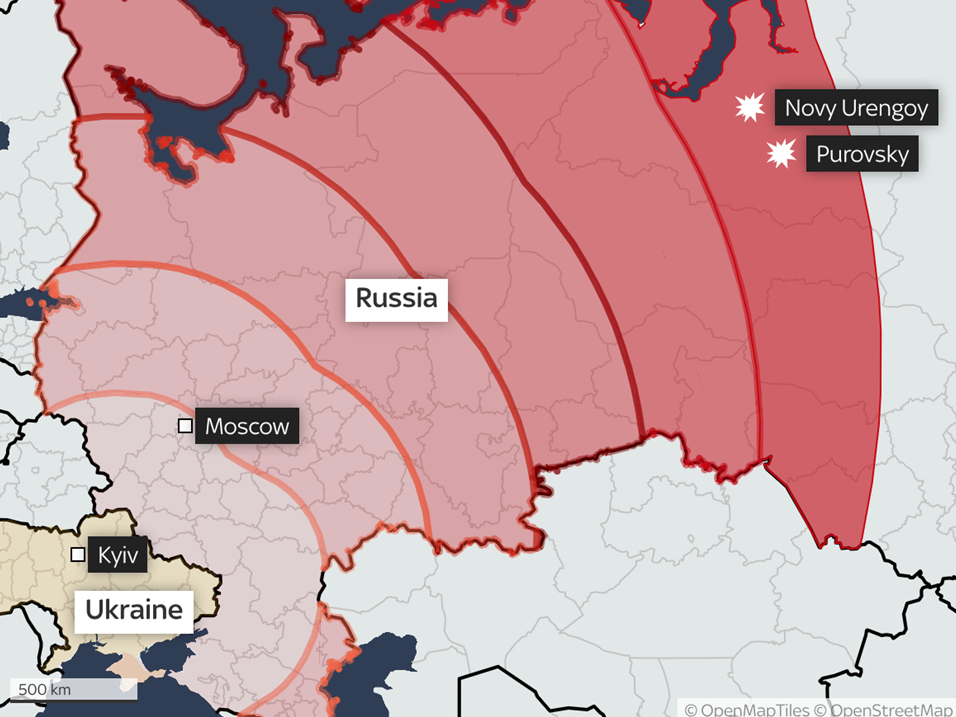
Ukraine’s Special Operations Forces struck a natural gas facility 3,200 kilometers inside Russia on September 9, the deepest strike of the war so far, hitting the Novy Urengoy Gas Condensate Treatment Plant in the Yamalo-Nenets Autonomous Okrug using Fire Point’s FP-1 drone. The plant processes 19.5 million tons of oil and gas a year for Russia’s military, and lies 600 kilometers from the Yamal LNG project supplying over 60% of Russia’s LNG exports, most of it to the EU. Ukraine has steadily extended its reach this year, striking an Omsk refinery nearly 2,500 kilometers out in July and Perm Oblast facilities beyond 1,500 kilometers just two days earlier.
The Army Insists It Hasn’t Given Up On Drones
Washington’s own drone commitment faced its own test of credibility this week. Army chief technology officer Alex Miller pushed back on lawmaker concerns over the decision to revert the 173rd Airborne Brigade’s drone battalion to conventional infantry, saying the unit was always meant as a temporary, six to seven month specialization built to learn lessons and pass them to the rest of the Army rather than a permanent standing force. Miller acknowledged the Army may not have “told the full story fast enough,” after the reversal drew a formal letter of concern from a bipartisan group of senators and representatives.
A Drone Sets A New Endurance Record
The Army’s drone industrial base kept delivering results even as that argument played out. A small battery powered drone flew for eight hours, 41 minutes and 43 seconds, covering roughly 300 miles, using brushless motors assembled at Tobyhanna Army Depot in Pennsylvania, a new world endurance record set at July’s Game of Drones event at Edwards Air Force Base and submitted to Guinness for verification. The Army says the aircraft itself was designed in under 10 minutes using computer prompts through software called Prometheus, then fabricated inside a mobile 3D printing factory within 24 hours, part of a wider push to build small drone components domestically rather than rely on foreign supply chains.
A Captured Drone Gives Iran Something To Study
Not every drone story this week involved building faster. Iran’s capture of a Dive-LD autonomous underwater vehicle in the Strait of Hormuz gives Tehran an opportunity to reverse engineer hardware from the vehicle’s maker, Anduril, even though the US Navy says the recovered drone was an older model carrying no classified sensors. Iran previously reverse engineered a captured RQ-170 stealth drone in 2011 and later unveiled domestic copies, and while analysts doubt Iran gains a decisive advantage this time, embassies have mocked the loss online, with Tehran’s mission in Ghana joking the drone was “still blinking like an idiot.”
Russian Tanks Get A New Layer Against Drones
Russia, meanwhile, is hardening its own armor against the threat that has driven so much of this arms race. Uralvagonzavod has delivered a fresh batch of T-90M and T-72B3M tanks fitted with an all round protection kit two years in development, wrapping the turret in a woven steel cable screen and adding armor over the running gear and hull sides. Recent shipments from the same plant have also included nets designed to intercept FPV drones before impact, though the company has not said whether this delivery includes them, as Russia works through tank losses Oryx estimates at more than 4,400 since the invasion began.
Ukraine Nets Its Own Supply Routes
Ukraine is applying a similar logic to the roads keeping its own front line supplied. The State Special Transport Service has equipped 1,382.6 kilometers of key logistics routes with anti drone netting since the start of the year, including 213.1 kilometers installed in August alone, alongside 551.3 kilometers of road repairs since restoration work began in April. Twenty three sections remain under active construction, with a further 33 already complete, part of a defensive build-out that mirrors the armor upgrades and interceptor development now underway on nearly every side of the war.
Featured Image – Sky News