DARPA Robots Hunt Targets, Humans Pull The Trigger
Four DARPA ground robots hunted targets at Fort Knox on their own, then waited for a human to approve each strike. Also: Magura boats strike inland, a Geran-5 weak spot, AI for Royal Marines, mine-hunting motherships and Japan’s robot trucks.
Robots Find, Humans Decide
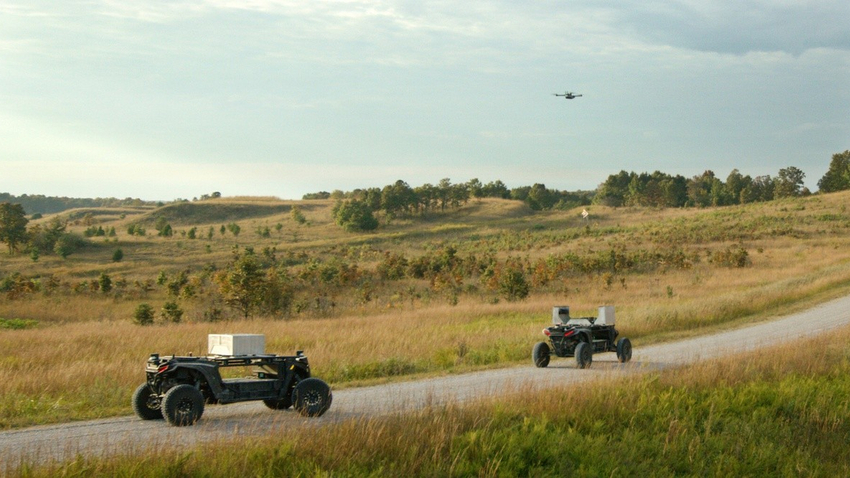
Four autonomous ground vehicles built under the Defense Advanced Research Projects Agency’s (DARPA) Robotic Autonomy in Complex Environments with Resiliency (RACER) programme hunted for simulated enemy forces at Fort Knox, Kentucky, on 15 October, the US Army reports. After a tip-off from satellite imagery, an operator tasked the team. The lead vehicle drove off in search of targets, stopped when it spotted one and waited for orders. Three of the four carried drone payloads, with Anduril one-way attack drones mounted on Overland AI vehicles, and a simulated rocket hit the target about 300 yards away. DARPA technical adviser Jason Gregory said movement and detection were autonomous but every engagement needed human approval, with the robots sending an image of what they had seen: “they don’t pull the trigger until a human says pull the trigger.” The test came at the request of US European Command. The five-year programme focused on high-speed off-road driving using onboard sensors, and soldiers will give their feedback in December.
Sea Drones Strike Inland
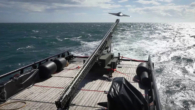
Ukraine’s Magura sea drones, which helped drive Russia’s Black Sea Fleet from Crimea, are now taking the fight onto land. Ukraine’s Military Intelligence Directorate (HUR) said in August that it had used Maguras as carriers for first-person-view (FPV) drones launched against targets ashore. It said drones from Maguras destroyed a Pantsir-S1 air defence system, two S-400 launchers and an antenna used to control Orion drones. In July, a naval drone dropped a ground robot on the Kinburn Spit. Oleg Rogynskyy, chief executive of maker UForce, would not discuss operations, but said it was not hard to imagine a Magura launching the company’s heavy Nemesis drone against Russian air defences, which he said were built for missiles rather than low-flying bombers at night. In a September exercise, Maguras launched drones, delivered supplies and landed amphibious ground drones for a beach assault.
The Geran’s Slow Middle
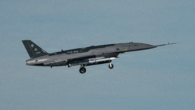
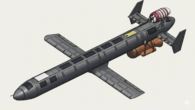
The Geran-5 K5-K looks more like a small cruise missile than a drone, but it may have a weakness, argues Ukrainian outlet Defense Express, analysing data released by Ukraine’s Military Intelligence Directorate. It cruises at about 450 km/h and reaches up to 1,000 km/h only in certain manoeuvres, probably a climb followed by a steep terminal dive. If so, its top speed comes when the interception window is already shortest, but the long cruise phase leaves it within reach of interceptor drones built for jet-powered Shaheds. With open-source estimates putting even the baseline Geran-5 at no less than about $200,000, interceptor drones or surface-to-air missiles are cost-effective answers. Its Susanin optical guidance makes the final stage less dependent on satellite navigation. Much is still unknown, including whether it can be air-launched, which units fire it and whether Russia uses mobile launchers.
AI For The Commandos
The Royal Navy has agreed a multi-million pound deal with British firm Arondite to put its Cobalt AI software across UK Commando Force. Cobalt, a mission orchestration system, will tie the commandos’ sensors, autonomous platforms and data feeds into one fighting system, speed up decisions in contested environments and let new hardware and AI capabilities be added quickly. It will also link the commandos with other UK units and partners across the Joint Expeditionary Force, and Norwegian units will test it during upcoming deployments under the new Northern Navies Initiative. Chief of the Defence Staff Air Chief Marshal Sir Richard Knighton announced the deal at the Atlantic Future Forum in Oslo. Arondite expects to double its workforce to 150 by next summer, and the commandos are getting a £100 million capability uplift for High North operations.
Motherships For Mine Drones
Britain will buy three mine-hunting motherships under its Lunna House Agreement with Norway, with £90 million allocated. The vessels come from Norway’s P1118 Standardised Vessel Programme of offshore support ships and will deploy uncrewed mine countermeasure systems, keeping sailors further from danger. The Ministry of Defence says they will also support anti-submarine warfare on NATO’s northern flank. The first is due in 2031, with an option for three more. Defence Secretary Wes Streeting and Norwegian defence minister Tore O. Sandvik formalised the decision in Oslo. The mine threat has grown since Iran began laying mines in the Strait of Hormuz after the war started in February, operations the Ministry of Defence called illegal and blamed for major disruption to global energy trade.
Japan’s Robot Trucks
Japan’s Acquisition, Technology and Logistics Agency (ATLA) is developing its own uncrewed ground vehicles in three weight classes, according to a symposium display shared on social media by Rikuno Yuuno, a former Ground Self-Defense Force soldier who now comments on military affairs. The smallest, under 1 tonne, is a tracked platform with four separate track units and an open cargo frame. A 1 to 2 tonne wheeled utility vehicle carries a flat bed, roll bars and sensors, while the 5 to 10 tonne class is a low tracked vehicle with a flat deck and what looks like a sensor turret. The panel mentions self-position estimation, coordination between crewed and uncrewed vehicles and the use of civilian technology, and says some vehicles are still being built. Japan has long bought foreign UGVs or adapted civilian vehicles, and has not said what roles each class will fill.
Featured Image – DARPA