Pakistan Buys 100,000 Turkish FPV Drones
Pakistan is buying 100,000 Turkish MERKÜT FPV attack drones, the largest such export order Turkey has announced. And: UForce hits £4.5bn, Zaluzhnyi on sea power, CCAs fly together, Europe’s defence AI and a 1,300-mile cargo drone.
Pakistan Buys 100,000 FPVs
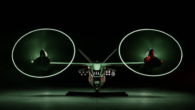
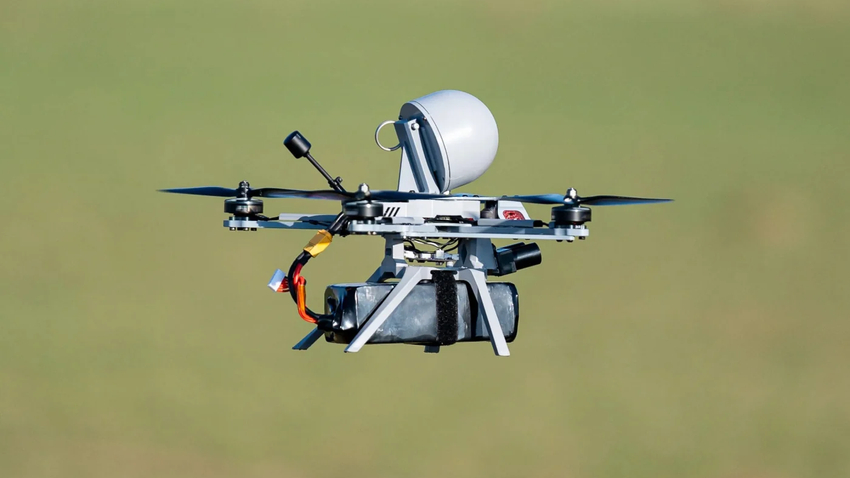
Istanbul-listed Pasifik Teknoloji has named Pakistan as the buyer of 100,000 MERKÜT first-person-view (FPV) attack drones, the largest export order a Turkish company has announced for the cheap, goggle-flown weapons. The three-year contract, signed on 18 September with Pakistan’s state-owned National Radio and Telecommunication Corporation (NRTC), also covers 10 ALPİN uncrewed helicopters, 25 smaller DUMRUL helicopters, 500 DELİ tactical kamikaze systems and 250 KORGAN autonomous ground units, plus local assembly in Pakistan. MERKÜT flies for 20 to 30 minutes, reaches targets up to 8 kilometres away and carries a warhead of 1,000 three-millimetre steel balls, triggered by a proximity sensor near the target. It entered Turkish service in August 2025. Pasifik has not disclosed the value, though Pakistani defence analysis site Quwa puts a reasonable baseline at around $100 million, based on comparable systems. It is Pasifik’s first defence export, and it puts Pakistan among the larger known FPV buyers outside the Ukraine war.
A £4.5 Billion Drone Maker
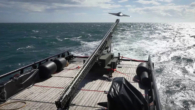
London-based UForce, founded by Ukrainians and best known for its naval drones, has reached a £4.5 billion valuation after raising more than £500 million, including £113 million from the UK’s National Wealth Fund. The other lead investor is Valor Equity Partners, whose partners include retired US General Christopher Cavoli, NATO’s supreme allied commander for Europe until last year. He will join the board alongside former defence secretary Ben Wallace. UForce makes drones for land, air and sea, and they have been used extensively in Ukraine. Defence Secretary Wes Streeting met chief executive Oleg Rogynskyy aboard HMS Prince of Wales in Oslo and piloted a UForce MV7 uncrewed vessel more than 1,500 miles away near Portugal. The Ministry of Defence says more than 70% of each UK-built boat will come from British suppliers, with hulls, engines, electronics and fit-out sourced at home.
Tonnage No Longer Counts
Naval warfare faces its biggest change since the torpedo, Valerii Zaluzhnyi, Ukraine’s ambassador to the UK and former commander-in-chief, told the Atlantic Future Forum aboard the same carrier, reports Euromaidan Press. Ukraine has destroyed at least a third of Russia’s pre-war Black Sea Fleet, he said, with uncrewed boats sinking ships such as the landing ship Caesar Kunikov and the corvette Ivanovets, and pushing the fleet back to Novorossiysk. As its warships withdrew, Russia turned on civilian shipping. Of 131 hits on merchant vessels, 55 were on ships flagged to NATO members and only nine on Ukrainian ones. Zaluzhnyi argued that Ukraine’s hybrid mosquito fleet offers a model for small states facing large navies, pointing to the Red Sea and the Strait of Hormuz. He called counter-drone defence a new layer alongside air, missile and mine defences, and predicted robotisation would shrink the human role in using weapons at sea while raising demands on engineers and planners.
CCAs Fly Together
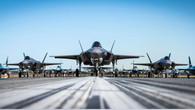
The US Air Force’s Collaborative Combat Aircraft (CCA) have flown in formation for the first time, executing beyond-visual-range counter-air tactics under Shield AI’s Hivemind autonomy software, the company says. It did not say how many aircraft took part in the 26 October flight or which CCA type flew. Each sortie feeds a software release, and Hivemind engineering vice president Todd Wesley says the process is nearing the point where the Air Force can fly, update the software overnight and fly again the next day. The milestone follows last month’s test in which an F-22 directed Anduril’s YFQ-44A. The Air Force wants 500 combat-ready CCAs by 2032 within a fleet of 1,000. Its 2027 budget request seeks $2.37 billion for the programme, including $996.5 million for procurement and $1.37 billion for research and development.
Europe Organises Its Defence AI
France’s armed forces ministry will create an international centre to promote and support the use of AI in defence, Reuters reports, as Europe tries to reduce its reliance on the United States for military technology. The same week, Britain and Norway signed a statement of intent on AI in Oslo. Among its aims is closer cooperation between the UK’s Taskforce RAID and Norway’s Defence Centre for Data and AI on the joint development, testing and operational adoption of AI-enabled defence capabilities. The two ministers, Kanishka Narayan for the UK and Torgeir Micaelsen for Norway, also plan to cooperate on secure compute and AI hardware, and on AI security testing between the UK AI Security Institute and AI Norway. The statement creates no legal obligations, and neither country put a figure on funding.
A Drone To Replace The Helicopter
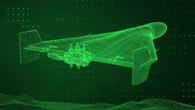
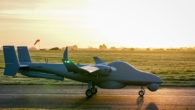
Texas start-up Skyways says its Skyreach hybrid drone can fly more than 1,300 miles and deliver cargo for about a tenth of a helicopter’s cost. That range assumes just 10 pounds of cargo, one way, at a steady 70 knots with no wind. With 50 pounds it drops to about 780 miles, and with 80 pounds to around 280. Eight electric motors lift it like a multicopter, while a two-stroke engine burning jet fuel handles cruise and charges the batteries. It has a 6.7-metre wingspan and a bay that can airdrop a package or lower it on a tether without landing. Skyreach is the production version of the aircraft behind a $37 million US Air Force contract awarded in 2025, and its predecessor has flown missions for the Marine Corps, Navy and Air Force. Customer flights are due in December.
Featured Image – MERKÜT FPV kamikaze drone – Pasifik Teknoloji