US Army Shuts Down Its Dedicated Drone Warfare Unit
The US Army is shutting its drone unit as NORAD warns bases are ill-equipped for attacks. Also: Ukrainian drones wrecked a US armor brigade in wargames, blinded an S-400 in a $170M hunt, a 2,000km Ukrainian UAV, and Turkey’s drone-carrying wingman.
The Army Steps Back From Its Own Drone Lesson
The US Army is shutting down the specialized drone unit it built inside the 173rd Airborne Brigade, ordering the roughly 600 soldier battalion back to conventional infantry duties. Acting Army chief of staff General Christopher LaNeve gave the order, reversing a push by his predecessor, General Randy George, who was ousted without explanation in April. The unit had spent a year building its own FPV drones and absorbing lessons from Ukraine’s Unmanned Systems Forces, work the Army says will now be folded into a final report rather than continued as a standing capability.
NORAD Says Home Bases Aren’t Ready Either
The timing sits awkwardly against a warning from the general responsible for defending American soil. Lieutenant General Joseph Jarrard, deputy commander of Northern Command, told the Space and Missile Defense Symposium that domestic bases remain “ill-equipped” to detect and stop drone swarms, citing gaps in sensors and interceptors that predate any specific attack. His comments followed a March strike on a US air base in Baghdad by an Iranian backed militia’s FPV drone, and come as the Pentagon plans to add laser weapons to at least five bases by the end of the year.
Ukraine’s Drones Keep Beating American Units In Practice
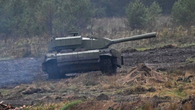
Wargames have already shown what that gap looks like in practice. During April and May’s Combined Resolve exercise in Germany, Ukrainian drone controllers defeated a US armor brigade so quickly that destroyed vehicles had to be respawned mid exercise so the drill could continue. NATO’s top military commander, Air Force General Alexus Grynkewich, said American and allied forces improved once they leaned on faster camouflage, dispersal and electronic countermeasures, calling the change “remarkable,” but the UK, Estonia and Sweden have all been similarly outmatched in separate exercises this year.
Ukraine’s Real Drones Are Doing The Same To Russia
Outside the training ground, Ukraine’s Security Service used Dovbush strike drones to hit five Russian air defense assets worth more than $170 million in a single overnight operation, including the 92N6 engagement radar that guides an S-400 battery’s missiles. Destroying that radar can strip an entire S-400 position of its ability to fire without touching a single launcher. Two Pantsir-S2 systems and two long range radars were also hit, stripping away the detection, guidance and close-in defense layers that are meant to protect each other.
The Same Manufacturer Builds Ukraine’s Next Long Reach
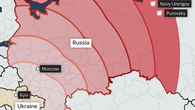
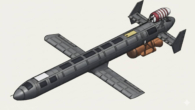
The company behind those strikes has also just extended its own range. Ukraine’s Ministry of Defense has codified the Dovbush T40, a new strike drone with more than 2,000 kilometers of range and over 24 hours of flight endurance, enough in theory to reach Russia’s Ural Mountains and western Siberia and return. Officials say it carries low radar visibility and jamming resistance, though its actual payload and combat performance have not been independently verified.
Turkey Shows Where The Wingman Idea Is Headed
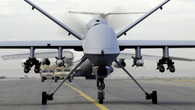
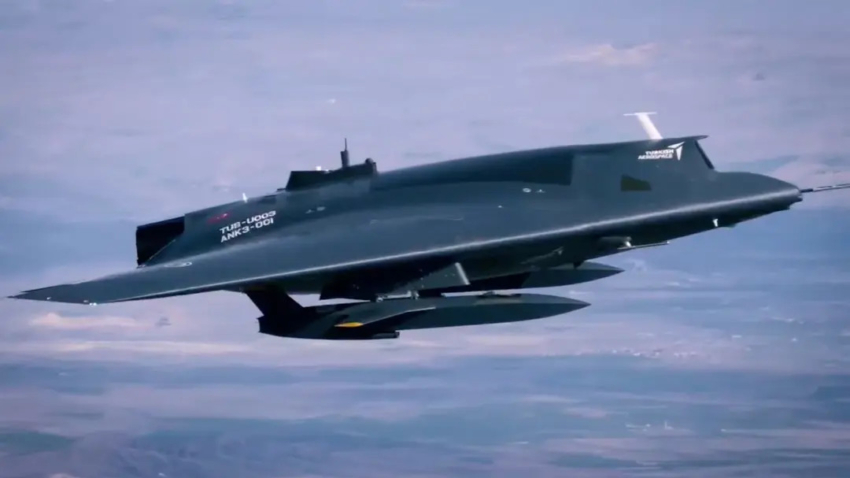
Elsewhere the same technology is moving toward teams rather than single aircraft. Turkish Aerospace released footage of its ANKA III stealth combat drone flying with two jet powered SÜPER ŞİMŞEK drones carried under its wings, a setup that lets the larger aircraft ferry smaller autonomous systems into contested airspace and release them for surveillance, jamming or strike missions. Turkey has previously shown a concept pairing its crewed KAAN fighter with ANKA III as a stealthy coordinator, with the smaller drones flying furthest ahead, the kind of layered, expendable formation the US units being disbanded this month were built to help figure out how to fight.
Image – The ANKA III stealth drone can deploy autonomous systems for electronic warfare, deception, ISR, and strike missions – Turkish Aerospace Industries