Ukraine Unveils The World’s First Robot Aircraft Carrier
Ukraine has confirmed the Magura MV11, the world’s first purpose-built robot carrier for drones. Plus: Britain buys into Ukraine’s AI labs, the Pentagon admits it’s behind, a commander’s doubts on ground robots, and Japan’s fast interceptor deal.
Ukraine Unveils The World’s First Robot Aircraft Carrier
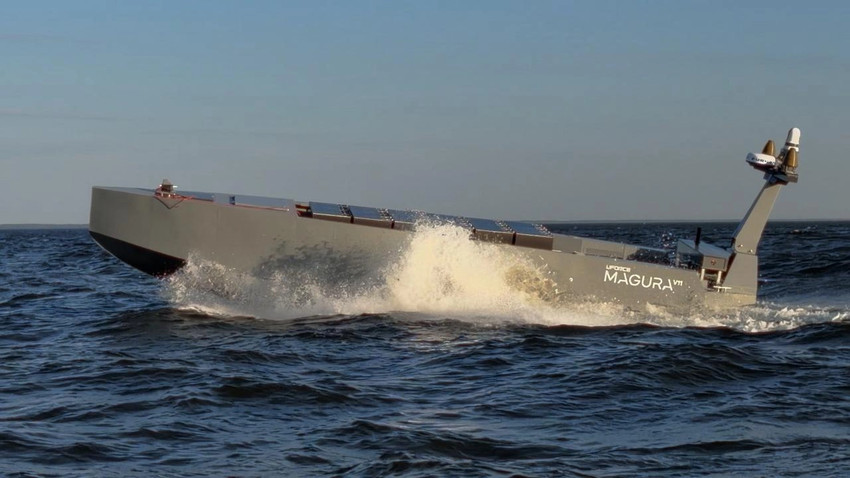
Ukraine’s UFORCE has publicly confirmed the Magura MV11, a 7 meter uncrewed vessel purpose built to launch and recover other drones rather than just carry weapons itself, shown off during an Independence Day sail-by on the Dnipro. Developed with Portugal’s RD bureau, the vessel carries a 2,200 kilogram payload and can operate autonomously for up to seven days, with deck space Kyiv Post researchers estimate could launch 20 to 40 FPV drones in a single wave. US builder RECONCRAFT signed a deal in July to produce Magura hulls in Oregon and South Carolina, with reported volumes reaching hundreds of boats a year.
Britain Buys Into Ukraine’s Battlefield Data
That American production deal is part of a wider pattern of allies buying into what Ukraine has learned rather than just what it builds. The UK and Ukraine signed an AI partnership this week giving British researchers access to Ukraine’s Avengers AI Labs, a database built from thousands of daylight and infrared battlefield sensors that have logged millions of tanks, air defences and drones to train targeting and detection models. In exchange Britain is backing Ukraine with its own AI ecosystem, starting with pilot projects turning buried fibre optic cable into sensors for protecting military bases and developing low power AI chips for future drones.
The Pentagon Admits It Is Behind
Washington’s own drone programme shows why that data matters so much. The Pentagon’s Defense Innovation Unit has acknowledged the US will have ordered under 200,000 drones cumulatively by February, against Ukraine’s projected 6 to 7 million FPV drones this year, a gap officials partly attribute to a rule requiring wholly domestic components that has slowed sourcing for parts like brushless motors. Six Ukrainian drone makers are now required to form joint ventures with US manufacturers as a condition of winning future orders, turning battlefield expertise into American manufacturing capacity rather than leaving the US reliant on imports.
Ukraine Reforms How It Buys Its Own Robots
Ukraine’s own procurement is maturing at the same time. Its Defense Procurement Agency will now buy ground robots against ministry set specifications sorted into classes, with no single manufacturer able to win more than half of any class, the same structure recently applied to fibre optic FPV drones. Ground robot missions logged in Ukraine’s DELTA combat system have climbed from 7,511 in January to nearly 16,000 in the first 20 days of August alone, with more than 22,000 units contracted since January, almost double all of 2025.
Not Every Soldier Is Convinced
Not everyone in that supply chain agrees on what the robots are for. Lieutenant Colonel John Black, whose British Army experimentation unit has tested dozens of uncrewed ground vehicles at a recent Fort Irwin exercise, says many need trailers to transport, struggle on uneven terrain, and that some manufacturers have quietly dropped autonomous features because they proved unworkable in practice. He sees real value in breaching and mine clearance, work that is dangerous enough that keeping a soldier out of it matters more than the robot’s limitations, but not as a universal replacement for people.
A 50 Year Old Jet Trains Tomorrow’s Drone Pilots
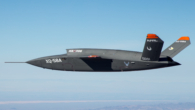
The US Air Force is running its own version of that argument in the air. Its VENOM programme is using six retrofitted F-16s, rather than F-35s, to develop the autonomy software meant to eventually fly Collaborative Combat Aircraft, since the Viper costs roughly half as much to fly per hour and its flight characteristics are already exhaustively documented after five decades of service. DARPA can run the same air combat scenario a thousand times and isolate software problems rather than chase quirks in an unfamiliar airframe, with lessons feeding directly into CCA designs like Anduril’s YFQ-44A, which the Air Force wants built at roughly a third the cost of an F-35.
Japan Compresses Years Of Procurement Into Months
Japan just showed how fast that kind of programme can now move. Its Acquisition, Technology and Logistics Agency signed a mass production contract with Terra Drone for the Terra B1 interceptor after a demonstration process explicitly modelled on lessons from the Middle East, where expensive missiles have strained stockpiles against Shahed type drones, and from Ukraine, where cheap interceptor drones have achieved high shoot down rates instead. The agency compressed demonstration to mass procurement into roughly three months, with deployment targeted for September, and Terra Drone has separately invested in a Ukrainian interceptor developer and plans to fold two Ukrainian companies into its own structure.
Image – UFORCE