Russian Developers Used Claude To Build An Autonomous Drone Swarm
Anthropic says Russians used Claude to build an autonomous drone swarm. Plus: the Air Force triples its CCA target, a cheaper Reaper rival, Germany’s AI drones for Ukraine, Poland’s rifle-sized interceptor, China’s combat robot, and a hiding from drones guide.
Russian Developers Used Claude To Build An Autonomous Drone Swarm
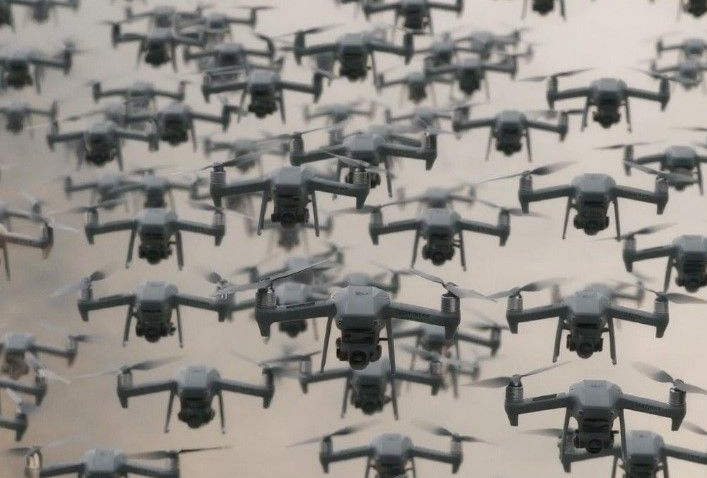
Anthropic’s September 2026 threat intelligence report disclosed that a small team of Russia based freelance developers used Claude to build software for an autonomous combat drone swarm project called DronDoc, or Serafim. Claude helped write swarm coordination, computer vision and terminal guidance code that let the drones select targets, including people, and issue detonation commands without a human in the loop, with the vision system trained on Ukrainian combat footage and tested against simulated missions. Anthropic banned the accounts once its systems flagged the activity as suspected weapons development, and assessed the group was not a Russian state entity, though it did not name the organisation behind the project.
The Air Force Doubles Its Drone Fleet Ambitions
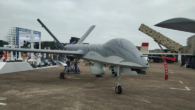
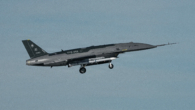
Washington’s own autonomy plans grew sharply this week. Air Force Secretary Troy Meink announced the service now wants at least 500 Collaborative Combat Aircraft in service by 2032, more than three times the “over 150” figure officials had cited only months earlier, alongside an equal number of Massed Modular Aircraft drones meant to succeed the ageing MQ-9 Reaper fleet by the same year. General Atomics’ YFQ-42 and Anduril’s YFQ-44 CCA prototypes, already rolling off the assembly line, received official nicknames Vengeance and Fury, while the MMA programme targets a unit cost near $10 million against the roughly $30 million price of a single Reaper, an aircraft whose numbers have thinned through losses during recent operations against Iran.
A Startup Pitches A Cheaper Reaper Replacement
California based Swarm Aero used the same conference to unveil Gamera, a 72 foot wingspan drone it says can match every Reaper capability while also carrying bomber class munitions like the Long Range Anti-Ship Missile the Reaper cannot, at what the company claims is a tenth of comparable strike costs. The Group 5 unmanned aircraft can fly roughly 9,000 nautical miles before refuelling, and Swarm Aero, which has invested tens of millions of dollars in the design since 2022, positions it squarely as a contender for the Air Force’s new Massed Modular Aircraft requirement.
Germany Arms Ukraine With AI Assisted Reconnaissance
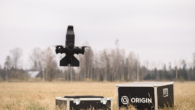
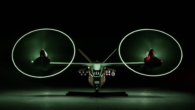
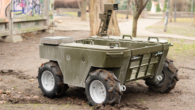
Ukraine’s own aerial reconnaissance is about to get a boost from German industry. Manufacturer Wingcopter is supplying Ukraine with its 262 model, a tilt rotor reconnaissance drone with a 150 kilometer range, six hour endurance and AI assisted electro-optical and infrared cameras, requiring no specialised launch infrastructure and light enough for one operator to prepare within minutes. The company is separately partnering with Ukrainian firm TAF Industries to build the drones domestically under the “Build with Ukraine” initiative, following a similar deal that saw German firm ARX Robotics commit to delivering hundreds more GEREON ground robots for logistics and casualty evacuation near the front line.
Poland’s Answer Is A Rifle Sized Interceptor
Polish firms WZL-2 and Blackfish unveiled the MAKO X1, a man portable counter drone system built around a single use interceptor drone meant to bring down Shahed and Geran type threats. The system reaches 400 kilometers per hour with a 10 kilometer range and roughly 10 minutes of flight endurance, relies on optical detection and autonomous terminal guidance, and is claimed to resist jamming during its final approach, positioning it as a lighter, more mobile alternative to guided missiles for ground and special operations forces.
Why China’s Sprinting Robot Should Worry Everyone
Not every advance this week involved a weapon. Days after a Chinese humanoid robot beat Usain Bolt’s 100 metre world record at the World Humanoid Robot Games, the People’s Liberation Army’s official newspaper called for accelerating the move of such machines from laboratories to military training grounds, describing them as “combatants” rather than experiments. A robotics researcher writing for The Conversation argues the real story isn’t the sprint itself but what it reveals about China’s ability to integrate motors, sensors and control software into a single industrial pipeline, and warns that the open source robotics frameworks powering humanoids make the technology far easier to replicate than nuclear or stealth capabilities ever were, whether the intended use is rescuing hostages or clearing a room of enemy soldiers.
A New Handbook Teaches Soldiers To Hide From Drones
For the soldier on the ground facing all of this, the Pentagon has published something far less technical. The Joint Interagency Task Force 401’s newly unclassified Counter-Small Unmanned Aircraft Systems Quick Reference Guide teaches troops to estimate distance using a football field, scan the horizon with their hands, and avoid giving away their position through the shine of glasses, a lit cigarette or a smartwatch’s radio signal. The guide breaks drone defense into detecting, identifying, defeating and reporting a threat, and reflects lessons drawn from Europe, the Middle East and law enforcement efforts securing the 2026 World Cup, a reminder that beneath every drone programme and AI safeguard sits a person trying not to be seen.
Featured Image – Freepik